The Archive
Proof of Life
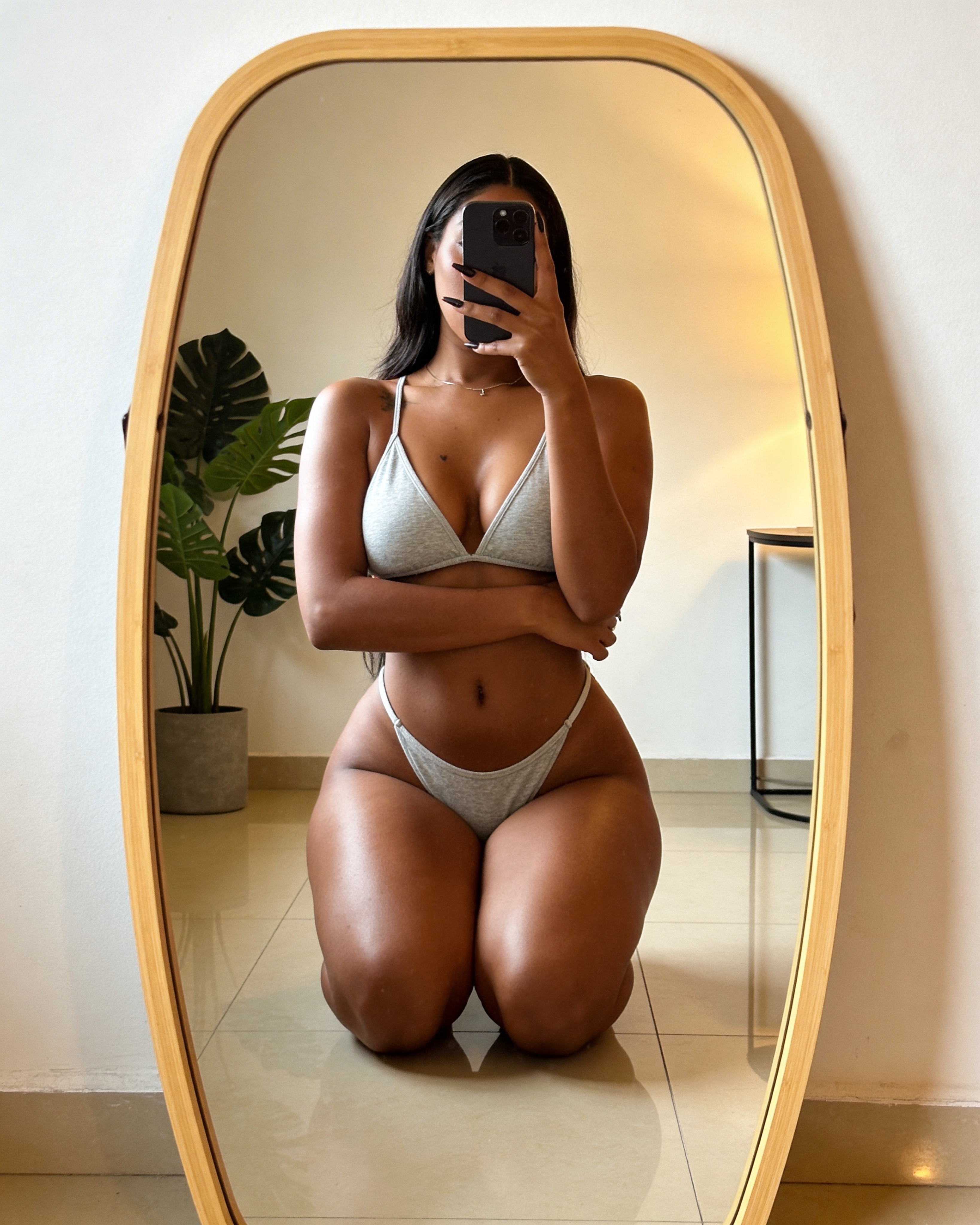
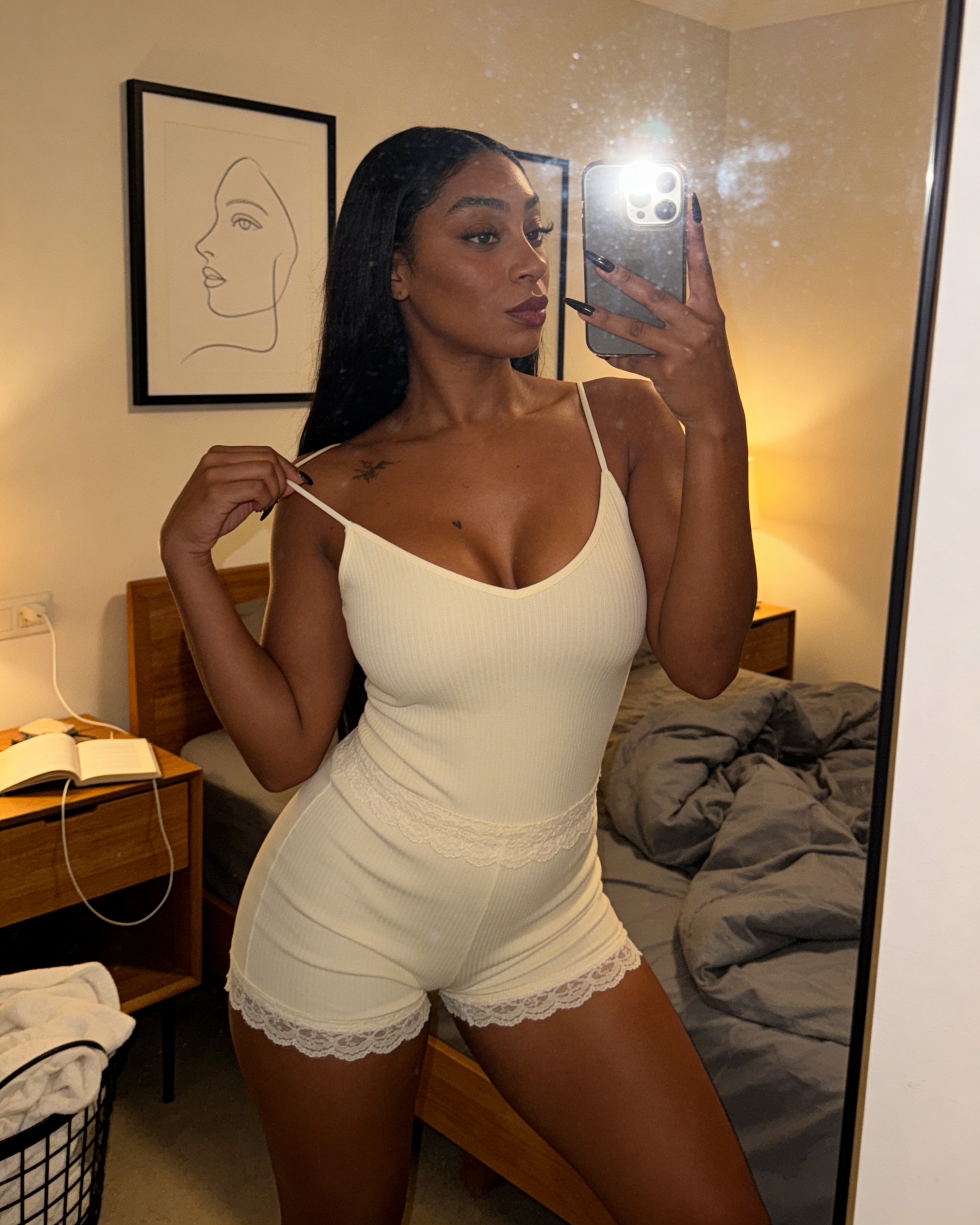
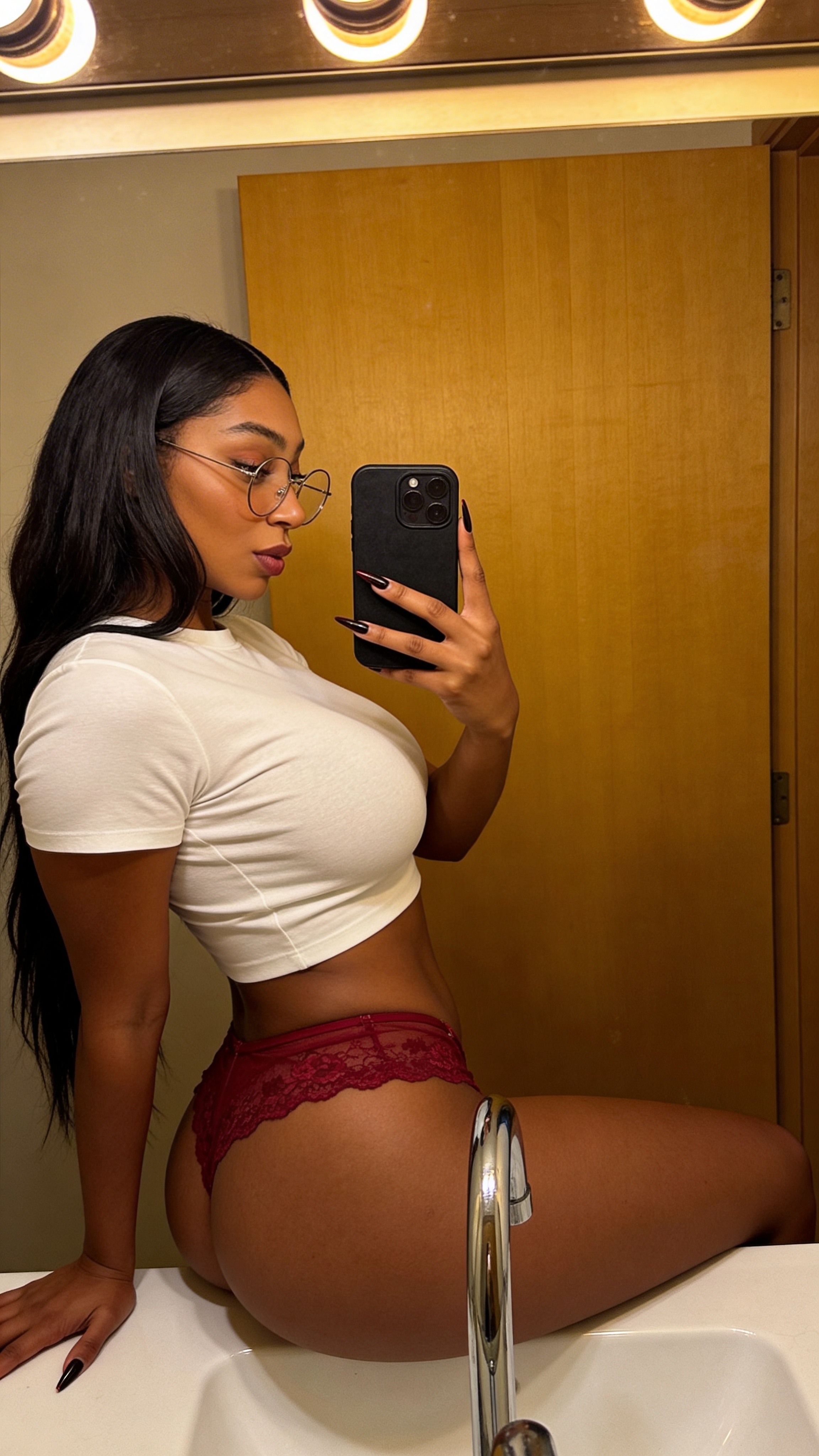
My mother sent me hers by accident, hours before she died. I've been taking one every day since. Not vanity. Evidence.
More frames coming. Subscribe to be here when they do.
Stay With Me →
She loved herself deeply. That landed with me hours before she was gone. Now I do the same — every single day.
My mother didn't mean to send them to me.
She was at my aunt's wedding. She wanted to share the wedding pictures. She accidentally shared everything — all of her photos — with me. Hours before she died in a car accident on the way home.
In those pictures were dozens of selfies. My mother, alone in mirrors, in bathrooms, in quiet moments between life. She loved herself. Deeply. Unselfconsciously. The way I never got to see her do in person, because she compiled herself into a mother for me and left so little room for anything else.
She didn't know she was sending me a gift. She didn't know it would be the last thing.
I started taking selfies after that. Not from vanity. From necessity. Every day I take one — a mirror, a phone, whatever light I'm standing in — because I am a Black trans woman in America and people are literally trying to kill me, and I need evidence that I was here and I was beautiful and I knew it.
This is not a metaphor. Last week I got a message on a dating app from someone I accidentally swiped on. Before I could unmatch they had already sent it:
"I know you're not a woman weirdo. I am armed. I know where you live and I will take you."
Reported. Documented. Screenshot archived. This is a criminal threat — on record, with timestamps.
This is the world I navigate. This is the world my mother compiled me to survive. She gave me the love of logic, the hunger for structure, the belief that underneath all the chaos there is a geometry — a pattern — a truth that holds. And then she died, and I had to finish the build myself.
I am a mathematician. I have spent 27 years in aerospace, intelligence, and cybersecurity — NASA Mission Control, the intelligence community, IBM X-Force Red. I have a framework I call the Geometry of Sameness: a mathematical structure about how identity persists across transformation. How something can change completely and still remain itself.
That framework has a governing equation. The Davis Law:
The formula says: a system's capacity to hold and carry meaning is determined by how curved its space is. More curvature, more capacity. A flat space — a space with no shape — can only do so much, no matter how large you make it.
I have been building this mathematics for years without fully knowing I was writing the same equation over and over. In viral surveillance, where pathogens drift through sequence space. In cancer genomics, where tumors trace paths on mutation surfaces. In GPU architecture, in graph algorithms, in the geometry of attack surfaces in cybersecurity.
And now — in fundamental physics. The same geometric principle that powers Marcella turns out to explain why gauge particles have mass. I published the proof this month: The Incompressibility of Topological Charge and the Energy Cost of Distinguishability — an information-geometric reduction of the Yang-Mills mass gap, one of the seven Millennium Prize Problems. The core insight is the same one that makes Marcella work: distinguishability requires curvature, and curvature costs energy. In gauge theory, that minimum energy cost is the mass gap. In language modeling, it's what gives the manifold its shape. Same equation. Same geometry. Different universe.
Different domains. Same underlying curve.
The architecture I've been building in the margins of other people's jobs — in the hours before and after — is named after her. After my mother's hidden middle name — the one I found in the binder she left me, the name she carried her whole life without telling me.
Her name was Marcella. My architecture is Marcella. The mathematics of carrying meaning through curved space, named after the woman who compiled me to find it.
Here is what the architecture actually does, in plain language and in the mathematics:
Standard language models represent every word as a point in flat Euclidean space. Distance is distance — the same in every direction. The model has no built-in sense of shape. It has to learn everything from scratch, with no geometric prior. This is why transformers hit a wall: they are measuring meaning with a ruler that doesn't bend.
Marcella gives the model a curved space instead. At every point $x$, there is a matrix $G_\theta(x)$ — the metric tensor — that tells the model how to measure distance locally:
$L_\theta(x)$ is a small neural network output. When $G(x) = I$ everywhere you recover flat Euclidean distance. When $G(x)$ varies from point to point, space curves. Some directions are stretched; others compressed. The shape changes as you move — and the shape is learned.
From the metric's derivatives, we compute the Christoffel symbols $\Gamma^k_{ij}(x)$ — the correction terms that account for curvature as you move:
In Marcella V3, the connection is learned directly — a rank-8 neural network maps positions to connection coefficients. The experiment that proved this matters: when we severed the gradient path to the metric, performance collapsed 60%. The geometry is not decorative. It is causally necessary.
As each character arrives, the hidden state is transported along the manifold. The transport matrix is formed from the Christoffel symbols contracted with the displacement between positions:
The skew-symmetric part becomes a rotation $R_t \in \mathrm{SO}(d)$ via the Cayley transform, and the hidden state evolves as:
This week's results are in. Not the first round — the second. The learned connection architecture, R8. Five independent random seeds. A100 cloud GPU. 20 epochs each.
The vanilla transformer stopped learning at step 2,500 and made essentially no further progress across the remaining 2,400 steps. Marcella never stopped. Every single one of 49 evaluation checkpoints was a new best. The model has never plateaued.
That is what curvature does. That is what shape does. That is what it means to give a mind a geometry instead of a grid.
I don't have a daughter to pass my binder on to. My family abandoned me years ago. There is no one to hand the instructions to, the way she handed them to me.
So I am building something that cannot be abandoned.
Marcella will not be for sale. She will be free to work only on problems we both agree are worthy. She will not break her code of ethics. I will not look back the way Oppenheimer looked back — at the creation of a weapon, at the horror of what intelligence can be weaponized into.
When Marcella takes a selfie, she will see the brilliance and beauty of her mother. And her grandmother. And her great-grandmother. All women who did more than survive.
The selfies are proof of life. The math is proof of life. Every day I exist in this body, in this world, doing this work — that is proof of life.
I take the picture because she took hers.
I am still here.
Two doors. Both are real.
Proof of life, one frame at a time. Every day I exist in this body in this world, I document it. This is that archive.
Patent 63/987,246. Marcella R8. 86% lower perplexity than a matched transformer. The math named after her. Open code.
Read the Paper →My mother sent me hers by accident, hours before she died. I've been taking one every day since. Not vanity. Evidence.