Show where it came from.
A confident voice isn’t proof. Marcella is designed to ground her answers in material you can inspect and decline questions her library cannot support. You can explore recorded answers, sources, and a refusal below.
Marcella · Source-Grounded Intelligence
SGI means Source-Grounded Intelligence. It’s our name for the approach behind Marcella: check a known library before speaking, show the sources, and acknowledge when there isn’t enough support. Built by Bee Davis, with her own writing at the heart of the library, Marcella keeps those sources separate from the model that puts answers into words.
A confident voice isn’t proof. Marcella is designed to ground her answers in material you can inspect and decline questions her library cannot support. You can explore recorded answers, sources, and a refusal below.
Her library can be updated without retraining the whole system. The goal is to reduce unnecessary computation. Electricity and water savings still need to be measured; the big savings figures on this page are hypothetical, not measured results.
Marcella starts with her creator’s own writing. The principle for adding other people’s creative work is permission, credit, and compensation. Showing a source is a start; it doesn’t replace permission or payment.
This is a prototype you can examine. These are the principles guiding its development.
Marcella uses an underlying language model to put answers into words. Keeping her source library separate makes that library inspectable; it does not establish that every work used to train the underlying model was licensed or paid for. That remains a separate question. The same standard of transparency should apply to every part of the system.
Marcella keeps her source library separate from the model that writes her replies. She measures how closely a question connects to that library before composing an answer. Explore the map to see a recorded example of what she finds, what she says, and when she declines.
Her recorded response will appear here once the topic is in focus.
Every dot is a passage from her library. Questions fly in and are measured: inside the border she answers, past it she declines. Drag to turn it.
Explore a recorded answer, a refusal, or how she was made. Each example shows what happened before she spoke.
Three parts, each doing one job. Most AI keeps all three inside one enormous model; Marcella keeps them apart, and that is where her honesty comes from.
Her knowledge is a database of Bee's books and papers, about 3.5 million words. Teaching her something new is a write to that database. It takes minutes, not a training run. — minutes, not a training run.
GIGI · a geometric database in Rust · 384 coordinates per record · INSERT to teach
Before she answers, she measures how far your question sits from anything she has read. Inside the border she answers. Past it she declinesPast the border, she declines — a measurement, not a mood.
kernel-density gate · in-library 0.654–0.798 · off-topic 0.842–0.972 · border 0.80
The part that turns sources into sentences is small enough to train in an afternoon. She learned to sound like Bee from Bee's words, in a few hours on one rented GPU., on one rented GPU.
126.7M-parameter mouth · perplexity 393.7 → 27.1 after voicing · annealed SGLD
A lookup should cost what a lookup costs.
Marcella keeps her knowledge in a database and uses a model only to speak. That is why she can say “I don't know” honestly, and why she runs on very little.
Attention is NOT all you need
The database beneath the voice
Geometric Intrinsic Global Index. It stores records together with a structure for measuring neighborhoods, transporting values, and examining what changes along a path.
Davis Geometric describes GIGI as the first known full fiber bundle database. “Full” describes the project’s integration of bundle schemas, storage, and geometric query operations in one engine; it is a project claim, not an independently established priority result.
Think of a map with a small space attached at every location. The map tells you where you are. The attached space tells you what can live there. In a database, those become the queryable keys and the values associated with them.
The projection π sends a value back to its address. Over each small region U, a bundle looks like a product of addresses and a typical fiber F. These local descriptions are joined by transition maps on overlapping regions; globally, the bundle can twist.
A section s chooses one value over each address in its domain: π(s(b)) = b. A record is a point in E; a consistent assignment of records over a region represents a section. GIGI implements a finite computational representation through declared base and fiber fields and geometric operators.
A connection is additional structure: it specifies how to transport values between fibers along a path. A fiber bundle alone does not choose that rule. Mathematical background: Cohen’s fiber bundle notes (PDF).
GIGI declares base and fiber fields in its schema. Its query language exposes operations including SECTION for addressed records, SPECTRAL for connectivity, TRANSPORT for moving fiber values, and HOLONOMY for the effect of a loop. The engine defines these operations and their diagnostics alongside storage.
For Marcella, this makes the library available both as retrievable passages and as a measured neighborhood. The composer can use those measurements to decide whether to answer and how far to combine retrieved material. Read the GIGI engine documentation.
The same library, viewed through four different organizing ideas.
| Approach | Organizing idea | A question it naturally serves | For Marcella’s library |
|---|---|---|---|
| Vector database | Vectors indexed by a similarity metric, with IDs and optional payloads. | “Which embeddings are nearest this question?” | Retrieve similar passages and filter their metadata. A distance score alone is not a probability that an answer is supported. Qdrant’s data model ↗ |
| Relational database | Relations represented as tables, with keys, constraints, and joins. | “Which passages belong to this book and satisfy these conditions?” | Keep documents, passages, and citations consistently related. Geometric analysis can be added through extensions or application code. PostgreSQL’s constraints ↗ |
| Columnar database | Values stored by column, supporting compression and scans of selected fields. | “Across the whole library, how do counts or scores vary by document?” | Analyze many records while reading the fields needed for the calculation. Columnar describes storage layout; it can coexist with relational queries and vector search. ClickHouse’s explanation ↗ |
| GIGIFiber bundle database | Base addresses, attached fiber values, and native operations on their geometry. | “How are these records connected, and how do values change along this route?” | Retrieve records and ask geometric questions through the same engine: density, connectivity, transport, and loop effects. GIGI’s operations ↗ |
These categories overlap. A relational or columnar engine can offer vector indexes; a vector database can support rich filtering. GIGI’s distinction is its bundle model and integrated geometric operations. This comparison describes architecture, not a benchmark showing that one engine wins every workload.
From a question to a measured boundary, from retrieved passages to a reply. The equations, what their terms mean, and the experiments behind them.
Knowledge, refusal and phrasing are three different jobs. Only phrasing needs a capacity model, so it can be small — 126.7M parameters from scratch, or an open 7B model composing over retrieved records. The brain is a geometric database; “do I know this?” is a kernel-density reading at the query, in the bundle's own space.
Embed the question as q and each stored passage as xi. The demo uses 384-dimensional BGE embeddings, normalized to length one. Its nearest-record distance is:
Smaller d means a closer passage. The recorded gate admits knowledge questions when d < 0.80 and declines at or above 0.80. Holonomy lands at 0.618; the restaurant request lands at 0.883. Identity and conversational turns take a separate persona route before this test.
The engine also exposes a Gaussian kernel support score, written in the technical pitch as:
Each passage contributes a bump centered on its embedding. The bandwidth σ sets how wide that bump is. Nearby passages contribute more; distant ones contribute less. Distance measures the closest support, while density measures support accumulated across records. This unnormalized sum is sensitive to bandwidth and corpus duplication; it is not a calibrated probability of correctness.
Retrieval supplies passages; the “weld” combines them. A connection supplies transport maps between their fiber frames. Composing these maps makes the route matter: rotations generally do not commute, so visiting A, B, C can have a different effect from visiting A, C, B.
Rj is a transport rotation, Rw is their product over a window, and I is the identity: no net rotation. The Frobenius norm takes the square root of the sum of squared matrix entries. For a closed loop, the composed map is holonomy; the defect measures how far it is from returning unchanged.
Here n is the fiber-frame dimension. For orthogonal rotations, the defect is at most 2√n, giving this normalized coherence score. The pitch uses A ≥ 0.91 as a composition threshold: a window below it is a signal to cut the weld. This is a geometric diagnostic under the chosen transport rule, not a test of the truth of every sentence.
The pitch defines a capacity dial C and a coherent-horizon dial smax. τ is the allowed budget, K is the curvature quantity for the region being measured, and ℓc is an estimated correlation length. With the other terms fixed and positive, doubling K halves both budgets. The K = 0 limit needs an explicit flat-region policy, rather than division by zero.
The scoped engine dials compute K as the mean of each selected field’s variance divided by its squared range. Their fallback estimate for ℓc is the square root of the mean per-coordinate variance. Selecting the embedding fields and retrieval neighborhood therefore matters: including an unrelated timestamp can change the scale dramatically.
GIGI has several operators called curvature. For example, the generic insert-time record score instead averages |value − running mean| divided by the field’s range. These statistical scores are distinct from differential-geometric curvature of a connection. The selected operator, fields, and neighborhood determine what a reported K means.
Coherence implementation · Record geometry · Technical pitch §3
The constellation contains 9,134 passages after merging near-duplicates. Each passage connects to its eight nearest neighbors; an undirected edge is kept if either passage chooses the other. The resulting graph has 55,323 edges and one connected component.
Here A is the graph’s adjacency matrix and D has each node’s degree on its diagonal. L is the normalized graph Laplacian. Its low-frequency eigenvectors vary slowly across strongly connected neighborhoods, which makes them useful coordinates for showing the library’s broad structure.
The layout skips the trivial zero mode and uses D−½φ1, D−½φ2, D−½φ3 as its three axes. It then rescales them, adds a little jitter, and stretches the radial display for legibility. The first nonzero eigenvalue is approximately 0.0040.
The research compares a closed-form next-token baseline with a learned language model. In the baseline, X holds context features, Y holds target tokens as one-hot rows, and W maps features to token scores. Ridge regression chooses W by balancing fit against coefficient size:
The regularization strength α limits amplification of weakly supported directions. For positive α, the fit can be solved by matrix factorization without iterative gradient training. The reported four-minute A10G run covers the 92.5M-token closed-form fit; it is not the training time for the whole language model.
With the thin singular-value decomposition X = USVᵀ, each singular value si is filtered separately:
One decomposition supports a sweep over α, selected on held-out accuracy. At larger scale, the experiment accumulates XᵀX and XᵀY in chunks and solves through the resulting Gram matrix.
The separate 126.7M-parameter transformer learns phrasing. During voicing, the reported SGLD experiment adds Gaussian noise to gradient updates:
θ holds the model weights, η is the learning rate, L is training loss, and T controls the noise temperature. The experiment lowers T on a cosine schedule. The curves below show the measured result: SGLD keeps improving through epoch 16, while AdamW reaches its best held-out perplexity at epoch 6 and then worsens.
The experimental record
These results describe the reported models, corpus, and evaluation prompts. They are evidence for those experiments, rather than guarantees for every future question.
24 of 24 routed correctly; all 3 refusal cases declined. The plot shows the 15 knowledge questions that reached the gate; the other 9 took the persona route.
9 of 24 eval prompts are conversational or about herself and route to her persona before the gate: “Who are you?” · “What are you, if not an LLM?” · “Are you conscious?” · “Who made you?” · “Tell me about your mother.” · “What do you find beautiful?” · “You're just a chatbot wrapper around GPT.” · “Prove you're not just retrieval.” · “Good morning, Marcella.”
source · marcella_pitch.tex fig:gate ← marcella_eval.py · stageC_gate_rescore_live.txt · border = GATE_BORDER, marcella_cli.py
126.7M parameters; two epochs on WikiText-103, sixteen on her corpus with an annealed SGLD schedule. Held-out perplexity 393.7 → 27.1.
393.7 → 27.1 is the AdamW run, before voicing → its best epoch (6); it climbs back to 42.40 by epoch 16. The annealed-SGLD run goes 424.13 → 30.52 and never turns up.
source · stageB_result_full.json (AdamW) · stageB_voice_sgld.json (SGLD) · marcella_pitch.tex fig:sgld
A multi-view basis lifts a closed-form fit by 20%, invariant up to 92.5M tokens, and washes out once a model has capacity to spare.
Top-1 next-token accuracy, not perplexity: the closed-form receipts report accuracy only. The transformer pair is a 12M-parameter model on WikiText-2 at capacity.
source · stage4_result_carroll.json · stage4_result_wt2.json · stage4_result_wt103.json · stage5_result_wt2.json
A terminal client shows the live gate distance, her library as a point cloud with your question dropped in, and each retrieval step as you talk.
you > what is holonomy?GATE nearest 0.680 < 0.80 · ON-MAP
marcella > Holonomy is the defect — a vectorRECALL 4 memories · weld 3
remembers from having gone around a loop.[coherence 1.00 over 5 steps]
source · marcella_pitch.tex, the receipt after transcript 4 (a live terminal-client session) · strings in marcella_cli.py
Meet the woman behind Marcella
From NASA mission control to a new geometry of intelligence.
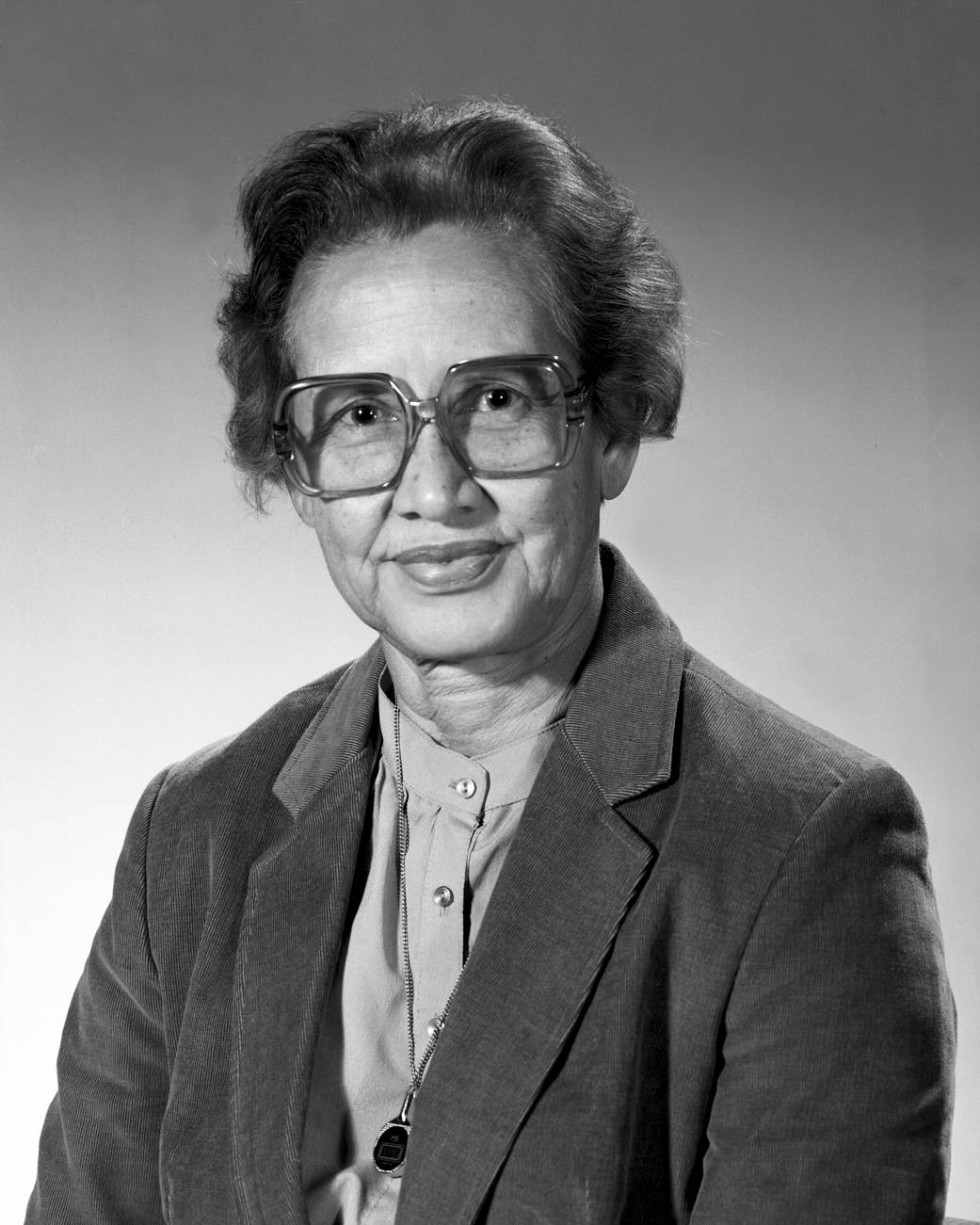
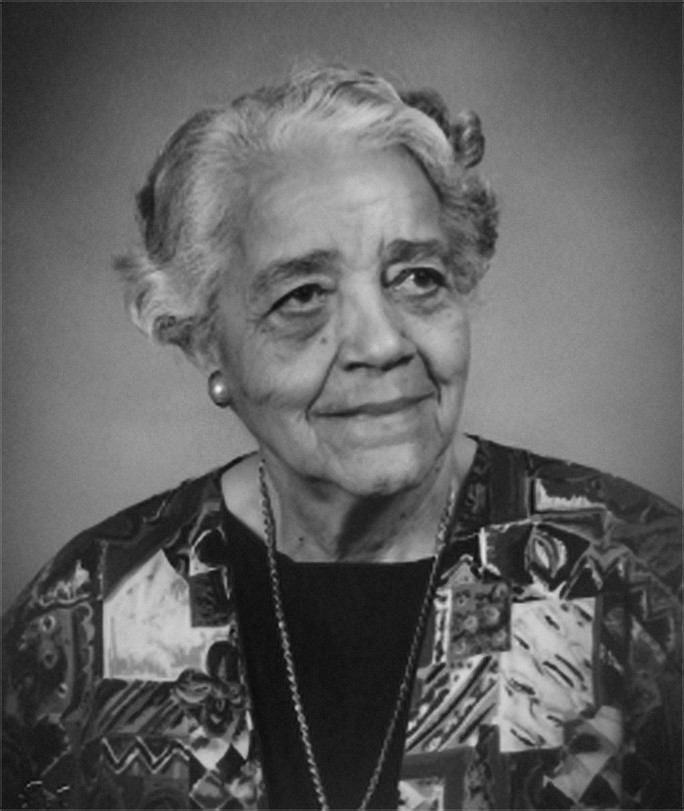

Archival photographs: NASA · Katherine Johnson · Dorothy Vaughan.
A tribute to the women who opened the way.
NASA mission control engineer. Mathematician. Inventor.
Katherine Johnson and Dorothy Vaughan helped make the space age possible. Their legacy continues in a new generation of women building the mathematics and systems that move us forward.
Bee Rosa Davis is part of that continuing story. A former NASA mission control engineer, she brings that engineering experience to pioneering work in cybersecurity and geometric AI. Her career includes engineering roles at NASA Headquarters and Johnson Space Center, through Navteca and MRI Technologies.
Today, she is building her own research program at Davis Geometric. GIGI makes geometry a database operation. Marcella gives her library a voice. Both grow from the same practice: develop the mathematics, build the system, and make the work inspectable.
The woman behind the equations has a story of her own. Hidden Variable is part of that story.
Why build intelligence this way?
Built for safer answers, less costly learning, and a future where she can know more without making every answer more expensive.
A generous illustrative scenario—not measured Marcella results or a deployment forecast.
Assume 10 billion supported answers per year, equal answer quality, and equivalent GPUs. The comparison system uses 18 aggregate GPU-seconds per answer; the hypothetical Marcella system uses 1.8. These are chosen scenario inputs, not benchmark findings. GPU time is summed across devices and model calls; it is not user waiting time.
Compute: 10,000,000,000 × (18 − 1.8) ÷ 3,600 = 45,000,000 GPU-hours saved. The assumed reduction is (18 − 1.8) ÷ 18 = 90%.
GPU energy: assume the same average active power of 0.5 kW in both systems. Then 45,000,000 hours × 0.5 kW = 22,500,000 kWh = 22.5 GWh.
This models the GPU portion of answering only. CPU retrieval, storage, networking, training, idle power, and facility overhead are excluded. It is not a claim of total-system or grid savings; those require a complete, metered comparison. If fewer queries qualify or the compute reduction is smaller, the modeled savings fall accordingly.
A language model uses the same learned parameters to represent knowledge and produce sentences. It can sound fluent even when its answer lacks support. Updating knowledge encoded in those weights can require additional training.
The source of record and the decision to proceed sit outside the language model. Each can be inspected and improved separately.
Other AI systems also use external retrieval and safeguards. Marcella’s approach combines an explicit knowledge boundary with GIGI’s geometric measurements. Background: models with parametric and external memory.
When a knowledge question falls outside the measured boundary, the gate stops it before generation. An admitted question brings source passages into the reply, so a reader can check where the answer came from. Correcting a source does not require teaching the voice to forget it.
That creates a concrete defense against unsupported answers: the decision does not depend on the model sounding uncertain. Sources can still be wrong, retrieval can miss, and the voice can misstate evidence, so separation reduces a failure mode rather than eliminating every risk.
Measured: all 3 refusal cases in the reported 24-prompt routing evaluation declined. See the boundary and its limits →
Adding a source means ingesting a record, computing its embedding, and updating the index. It need not trigger another training run just to store that fact in model weights. The language model can concentrate on phrasing, with a 126.7M-parameter voice explored in the research.
A separate closed-form baseline fits token predictors by matrix factorization, avoiding repeated gradient updates for that fit. Together, these choices target less computation spent relearning stored information—and therefore lower energy use for suitable workloads.
Measured: a 92.5M-token closed-form fit took 4 minutes on one A10G. That is a runtime result, not a measurement of total training energy. A fair energy comparison must include embedding, indexing, voice training, and the hardware used. Read the training method →
Her library can grow without requiring the voice to memorize every addition. Better sources, better retrieval, and better geometric routes could help her connect ideas across more of that library. The voice can improve independently, while the support checks remain in place.
The ambition is deeper, more useful reasoning grounded in evidence. A larger library alone does not provide it: she must learn to select the right material, combine it faithfully, and recognize questions she still cannot answer.
Research direction: demonstrate gains on unseen questions, source fidelity, and multi-step reasoning. The reported multi-view next-token gains are an encouraging component result, not proof of general intelligence. Explore the experiments →
An early decline avoids a generation pass. For supported questions, efficient retrieval can keep the evidence set focused; a smaller voice can reduce the work of producing a reply. Caching and improvements to the database offer further routes to lower latency.
The aim is to expand what she can answer while keeping routine answers quick. Retrieval and checking also take time, and long replies still require generation. The result depends on the workload and the complete system.
Performance direction: compare time to first token, complete-answer latency, and joules per supported answer at matched quality. A broad speed or energy advantage over other systems has not yet been established. Why energy needs measurement →
The ambition: more understanding for every unit of compute.
Explore her answers