Conditional separation / the geometric-to-computational bridge
Research settingIndependent
The manuscript P ≠ NP under Davis Axioms proposes a geometric separation under additional assumptions. Its title is conditional, and that condition is the central mathematical issue to examine.
From the research record
Inspect the work
Original figures, recorded values, and explicit model details. Each exhibit identifies its source and what the comparison means.
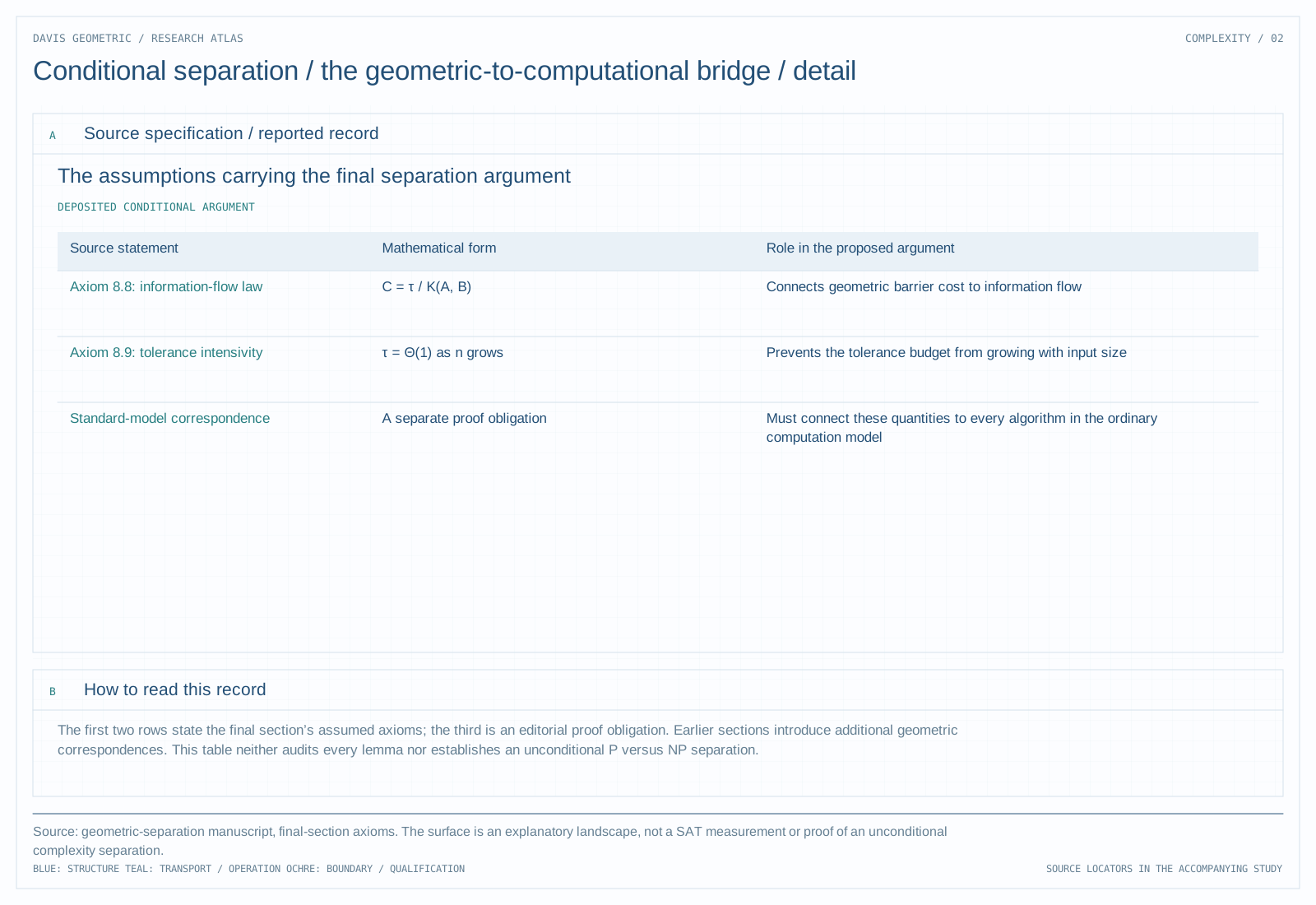
The assumptions carrying the final separation argument
Scroll horizontally to inspect the full table →
| Source statement | Mathematical form | Role in the proposed argument |
|---|---|---|
| Axiom 8.8: information-flow law | C = τ / K(A, B) | Connects geometric barrier cost to information flow |
| Axiom 8.9: tolerance intensivity | τ = Θ(1) as n grows | Prevents the tolerance budget from growing with input size |
| Standard-model correspondence | A separate proof obligation | Must connect these quantities to every algorithm in the ordinary computation model |
The first two rows state the final section’s assumed axioms; the third is an editorial proof obligation. Earlier sections introduce additional geometric correspondences. This table neither audits every lemma nor establishes an unconditional P versus NP separation.
Read the technical figure
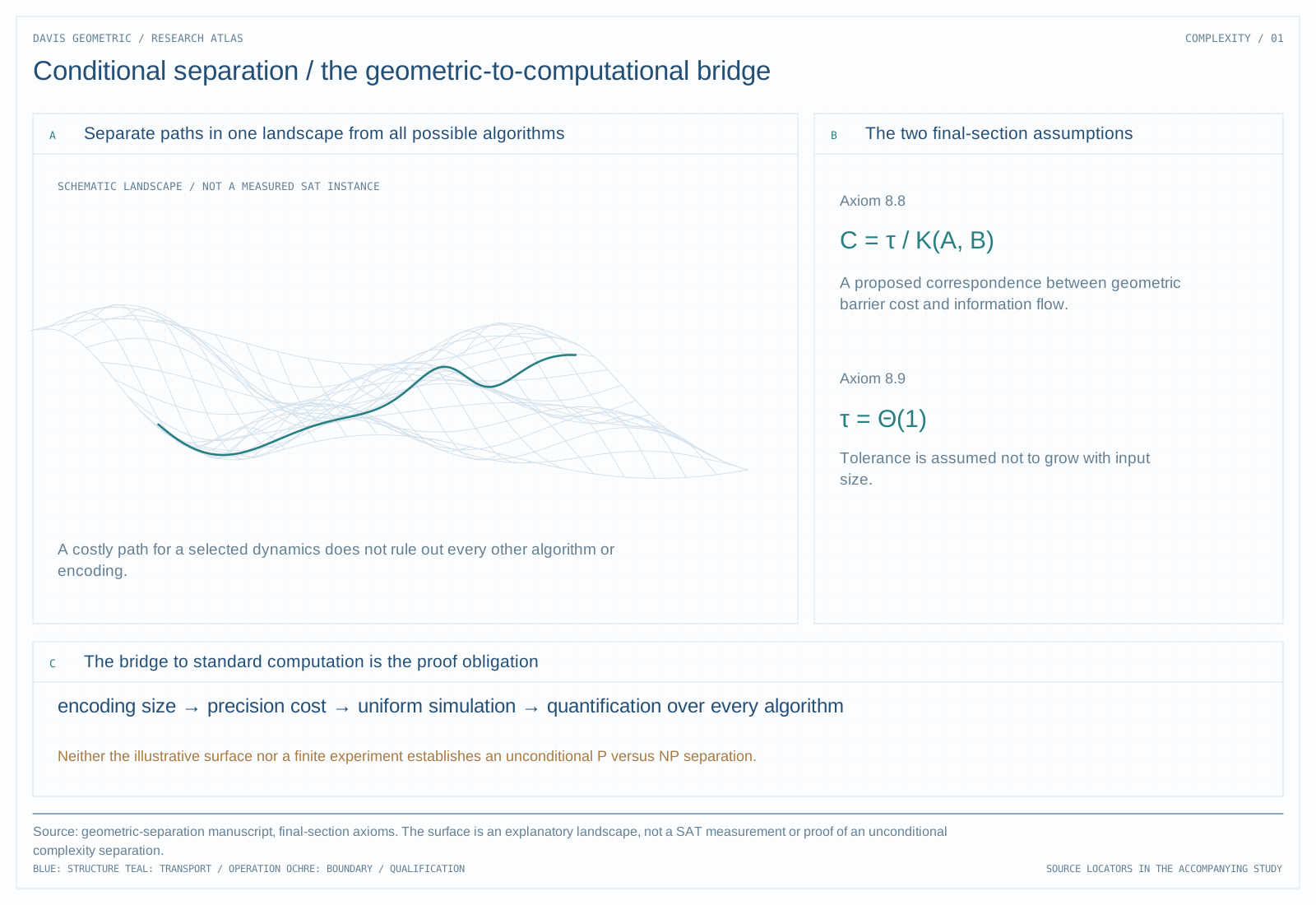
Source: geometric-separation manuscript, final-section axioms. The surface is an explanatory landscape, not a SAT measurement or proof of an unconditional complexity separation.
Source: geometric-separation manuscript, final-section axioms. The surface is an explanatory landscape, not a SAT measurement or proof of an unconditional complexity separation.
Supporting detail
From a search landscape to a complexity statement
The historical description contrasts polynomial and exponential energy landscapes through geometric barriers. To obtain a complexity theorem, the construction must specify how an input and computation are encoded and how ordinary computational cost relates to the proposed geometric cost.
A hard path for one algorithm does not rule out every polynomial-time algorithm. Nor does a continuous energy barrier imply a lower bound on discrete computation unless the correspondence is established. The extra axioms must carry that bridge explicitly.
What “under the axioms” leaves to prove
A valid implication from a stated axiom system can be worth studying without settling the standard P versus NP problem. The next question is whether the axioms follow from the ordinary model of computation, restrict it to a special class, or already encode the desired separation.
The reviewed site record identifies the manuscript but does not supply a completed independent audit of that bridge. This note therefore presents the proposed line of attack without replacing the missing argument with a numerical landscape illustration.
Sources, scope, and next question
Deposited conditional argument; an unconditional separation is not established here.
The representative revision should put the axioms, encoding map, cost correspondence, and one critical lower-bound lemma on the page. Review can then target a concrete implication instead of an analogy between roughness and difficulty.