GIGI / record identity, fibers, and geometric queries
Research settingIndependent
GIGI makes geometric operations part of a database interface. Its documentation gives a concrete path from defining a bundle and inserting measurements to querying records, inspecting variability, and comparing transported states.
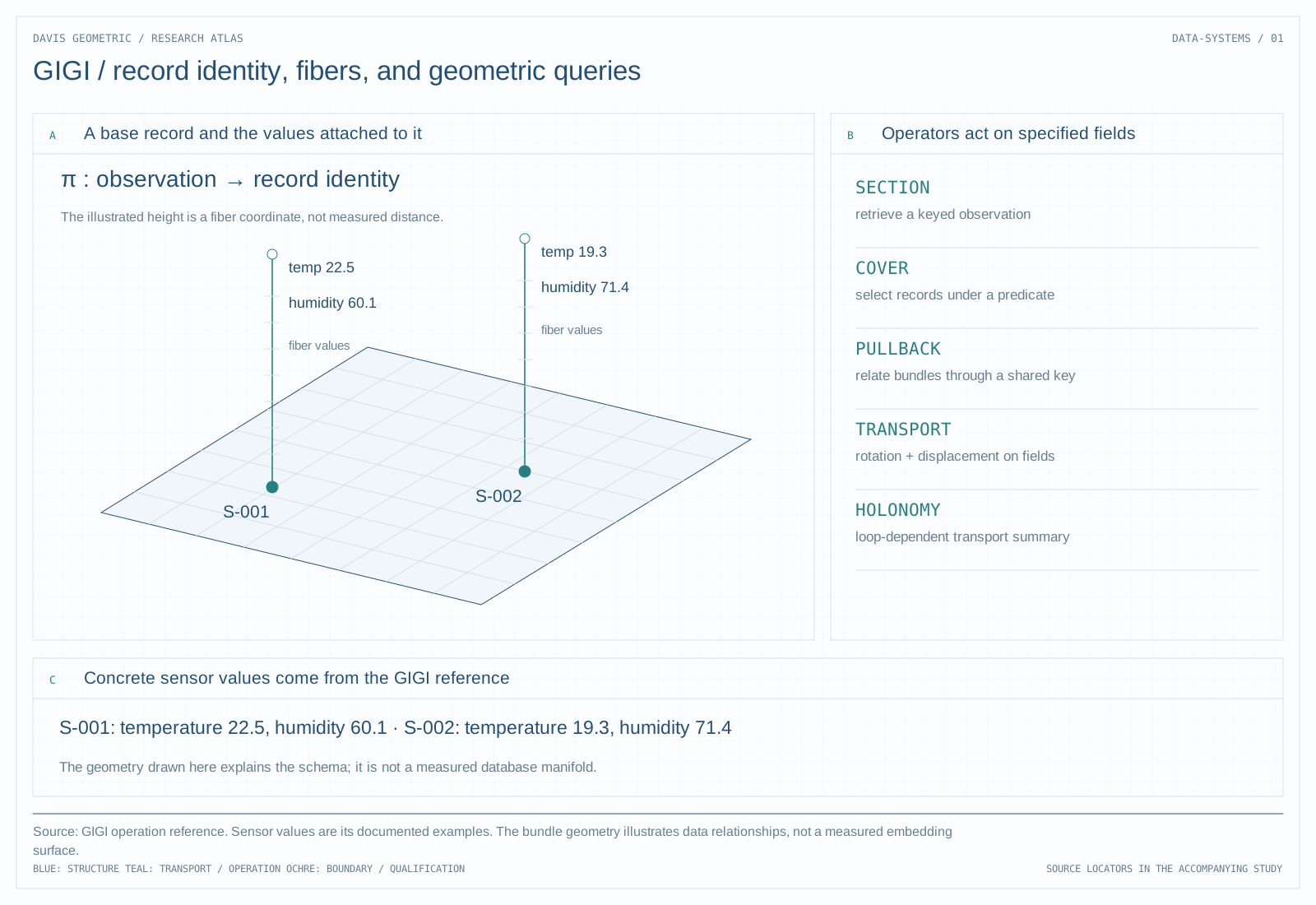
From the research record
Inspect the work
Original figures, recorded values, and explicit model details. Each exhibit identifies its source and what the comparison means.
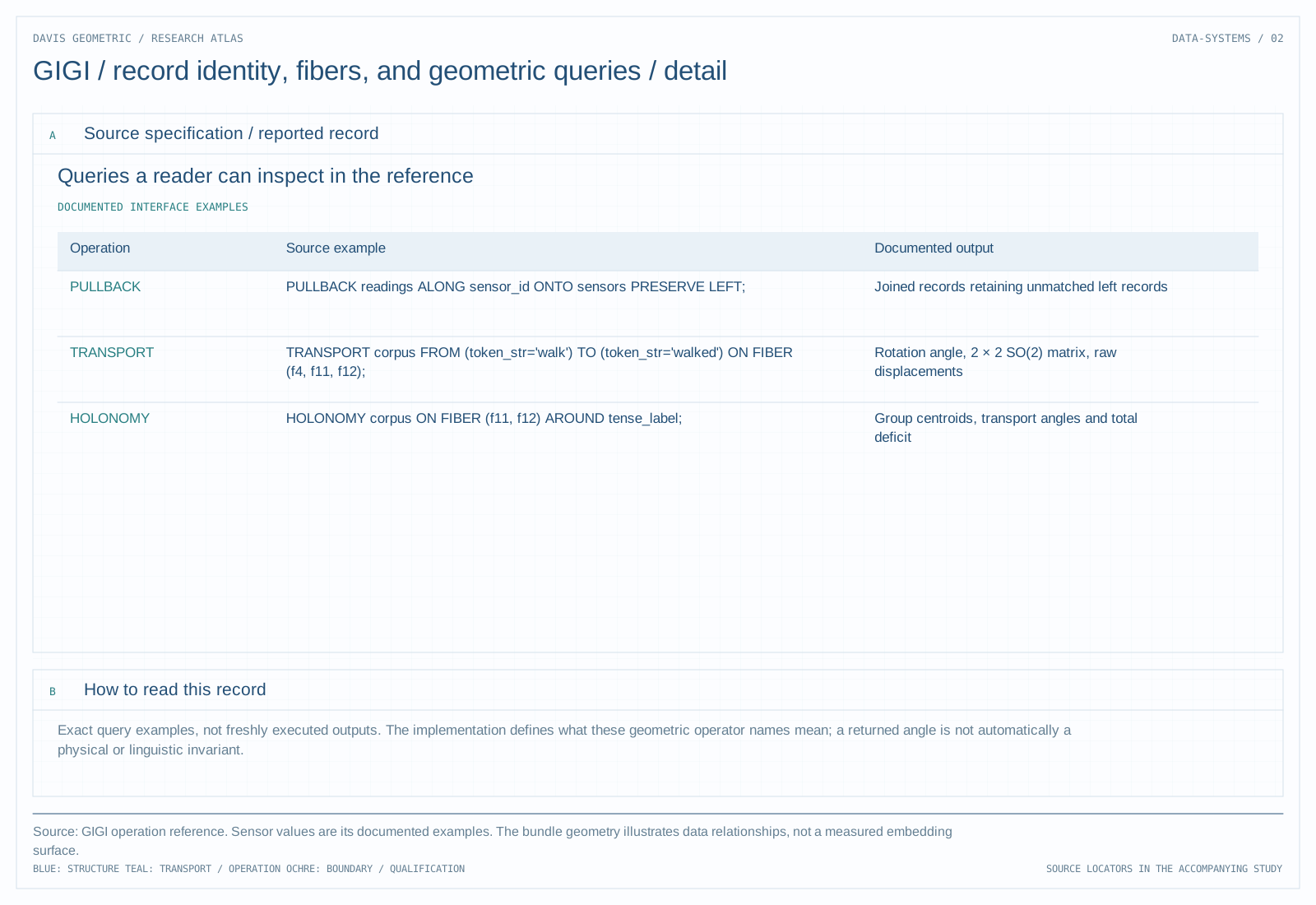
Queries a reader can inspect in the reference
Scroll horizontally to inspect the full table →
| Operation | Source example | Documented output |
|---|---|---|
| PULLBACK | PULLBACK readings ALONG sensor_id ONTO sensors PRESERVE LEFT; | Joined records retaining unmatched left records |
| TRANSPORT | TRANSPORT corpus FROM (token_str='walk') TO (token_str='walked') ON FIBER (f4, f11, f12); | Rotation angle, 2 × 2 SO(2) matrix, raw displacements |
| HOLONOMY | HOLONOMY corpus ON FIBER (f11, f12) AROUND tense_label; | Group centroids, transport angles and total deficit |
Exact query examples, not freshly executed outputs. The implementation defines what these geometric operator names mean; a returned angle is not automatically a physical or linguistic invariant.
Read the technical figure
Source: GIGI operation reference. Sensor values are its documented examples. The bundle geometry illustrates data relationships, not a measured embedding surface.
Source: GIGI operation reference. Sensor values are its documented examples. The bundle geometry illustrates data relationships, not a measured embedding surface.
Supporting detail
From a sensor record to a bundle
In the documented sensor example, an identifier locates a base point and temperature and humidity are values on the fiber. BUNDLE defines the structure, SECTION inserts or retrieves a record, COVER selects a subset, and INTEGRATE aggregates measurements. PULLBACK connects records through a shared key. The geometric vocabulary is attached to explicit data operations.
The interface also exposes CURVATURE, TRANSPORT, HOLONOMY, and SPECTRAL. For example, TRANSPORT reports a rotation and displacement between two records on selected fiber fields. A researcher can inspect a representation change through the same interface used to retrieve its underlying observations.
An operational definition is part of the result
The documented confidence score is 1/(1+K), where K is the selected variability or curvature reading. That is a defined score, not automatically a calibrated probability that an answer is correct. Likewise, a database operation named HOLONOMY needs its implemented transport rule and loop construction to be scientifically interpretable.
The documentation distinguishes executed operations from parsed but unavailable families and from features marked for a later deployment. This distinction is more informative than a universal claim that every geometric operation is already supported.
Three related systems, three different questions
GIGI is the storage and query substrate. The separate GEODESIC retrieval project investigates trajectories and indexing. DHOOM concerns structured serialization. A compact wire representation does not establish a faster query engine, and an indexed point read does not establish the cost of an arbitrary geometric query. The three projects share this catalog entry, but their mechanisms and evaluations remain distinct.
Sources, scope, and next question
Documented database interface and companion applications; operation semantics must be distinguished from performance and scientific interpretation.
A representative evaluation should follow a real query from ingestion through updates and reads, recording the meaning and cost of each geometric operator. The key comparison is whether retaining this structure changes a task outcome, not merely whether the vocabulary can be expressed in a query language.