DEMETER / root-zone physics and attached context
Research settingNASA
DEMETER organizes agricultural observations around practical state questions: water availability, nutrient demand, equipment recovery, and progress through the growing season. Its specification makes the source of each parameter part of the design.
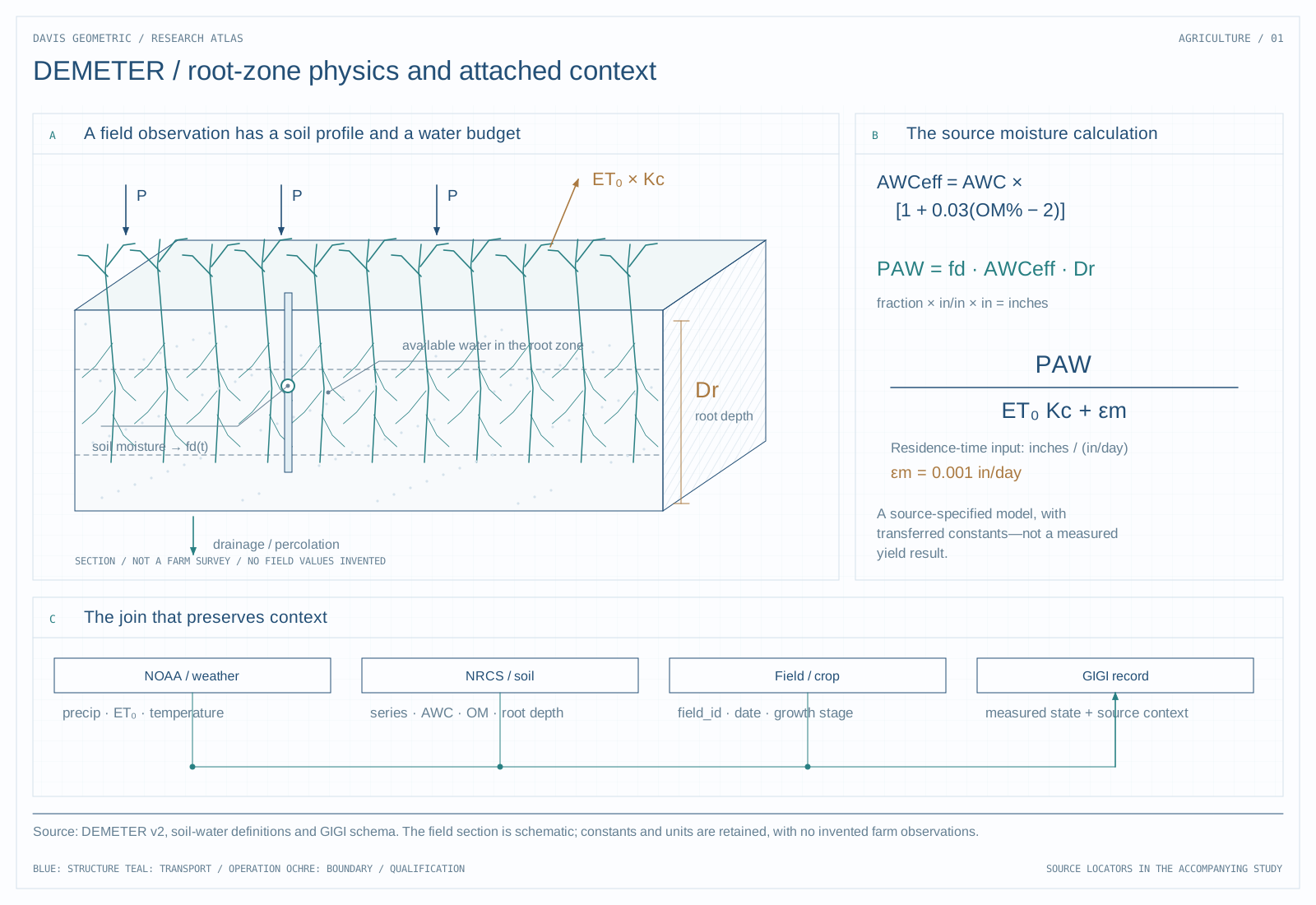
From the research record
Inspect the work
Original figures, recorded values, and explicit model details. Each exhibit identifies its source and what the comparison means.
The fields the model actually keeps
Scroll horizontally to inspect the full table →
| Bundle / key | Retained quantities | Units or context |
|---|---|---|
| field_observations / field_id + date | tau_m, K_m, sm, precip, et0, kc | days; in/day; moisture %; in; in/day; crop coefficient |
| equipment_telemetry / machine_id + timestamp | tau_e, K_e, hydraulic_psi, engine_rpm | ms; ms; psi; rpm |
| fields / field_id | soil_series, awc, om_pct, root_depth | Soil series, water capacity, organic matter %, rooting context |
| phenology_tracking / field_id + date | gdd_accumulated, gdd_remaining, growth_stage | Growing-degree-days and labeled growth stage |
| market_observations / commodity + report_date | ending_stocks, consumption, tau_mkt | Million bushels; million bushels/month; months |
Transcribed from the specified GIGI bundles. This is a data model, not a table of farm observations. The domain-dependent units are retained; equal formula shapes do not make moisture, machinery and markets equivalent.
DEMETER-SPEC.md · Version 2.0, section 1.4 Data Model
Read the technical figure
Source: DEMETER v2, soil-water definitions and GIGI schema. The field section is schematic; constants and units are retained, with no invented farm observations.
Source: DEMETER v2, soil-water definitions and GIGI schema. The field section is schematic; constants and units are retained, with no invented farm observations.
Supporting detail
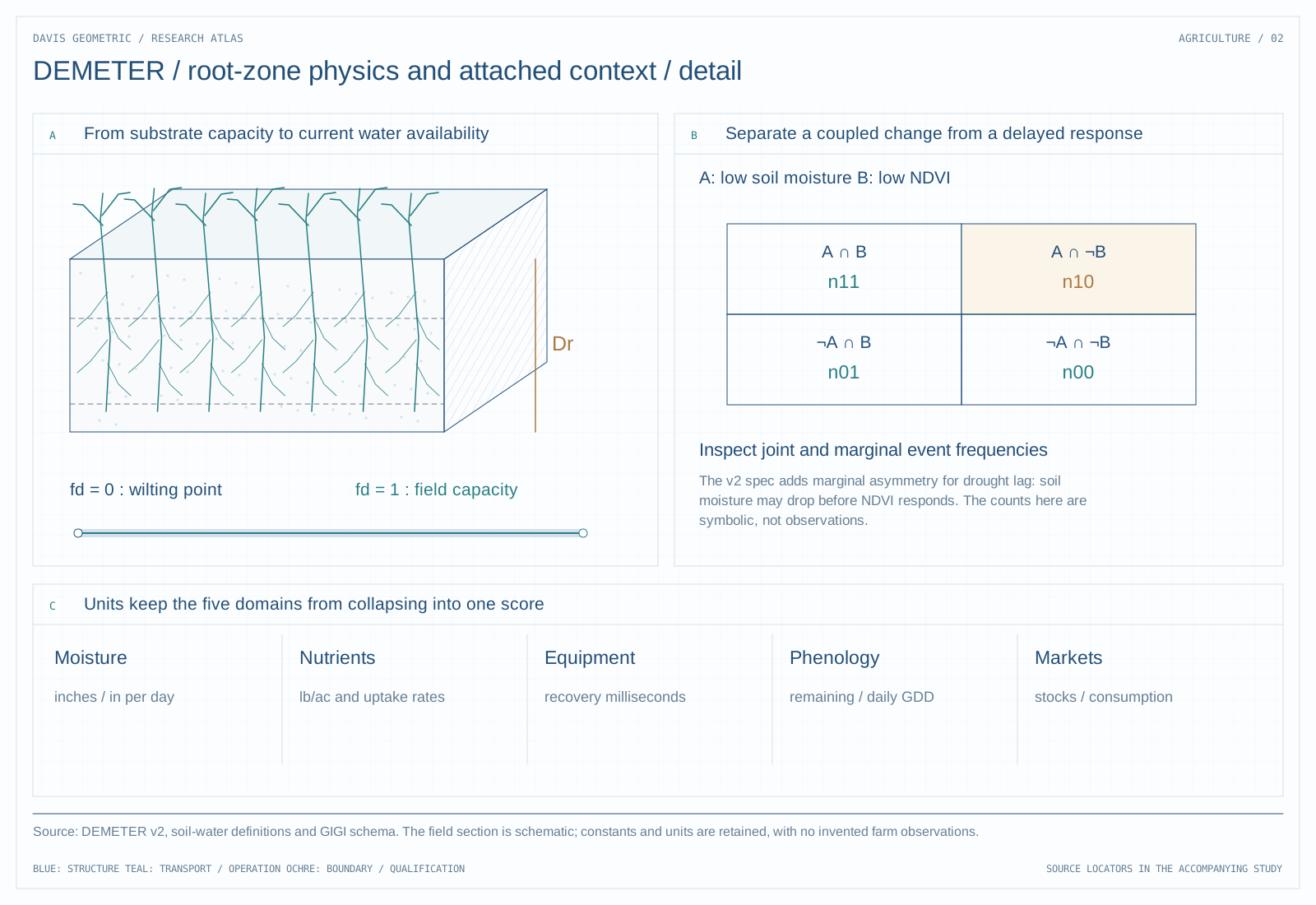
A daily observation is more than a sensor value
The specified data model attaches weather, crop, soil, and field context to each observation. Soil available-water capacity, crop coefficients, precipitation, reference evapotranspiration, and growing-degree-day accumulation appear alongside the field and date. Equipment telemetry has its own machine identifiers and recovery-time quantities.
This is the representational contribution: a moisture reading is interpreted with the substrate and demand that give it meaning. A single number pooled across soils or growth stages would erase distinctions that the model needs.
Three classes of constants
The specification separates structural regularization constants, transferred physical constants, and farm-specific fitted parameters. It proposes using the first two without estimating the third at deployment. That is more precise than saying the system has no parameters.
Transferred constants still have units, source populations, and validity ranges. The specification’s ratios use domain-dependent quantities, so the repeated form C = τ/(K + εd) cannot by itself make a moisture calculation equivalent to an equipment or market calculation. Each interpretation needs a dimensional and empirical bridge.
Sources, scope, and next question
Version 2.0 technical specification; the absence of local fitting is a design choice, not evidence of universal transfer.
A useful field study would compare predicted state changes with held-out farms and seasons while tracing errors back to the transferred constants. That would test the claimed portability rather than merely checking that the formula runs.
Additional source versions reviewed
-
demeter/DEMETER-SPEC.mdLocal project manuscript or report · not republished here