PSYCHOHISTORY / connected and disconnected regimes
Research settingCrowdStrikeCollaboration with Dr. Paolo Di Prodi on the Psychohistory analysis tool
PSYCHOHISTORY models bilateral relationships using economic integration and diplomatic alignment. The later manuscript adds a separate treatment for weakly connected dyads where the original ratio becomes unstable.
From the research record
Inspect the work
Original figures, recorded values, and explicit model details. Each exhibit identifies its source and what the comparison means.
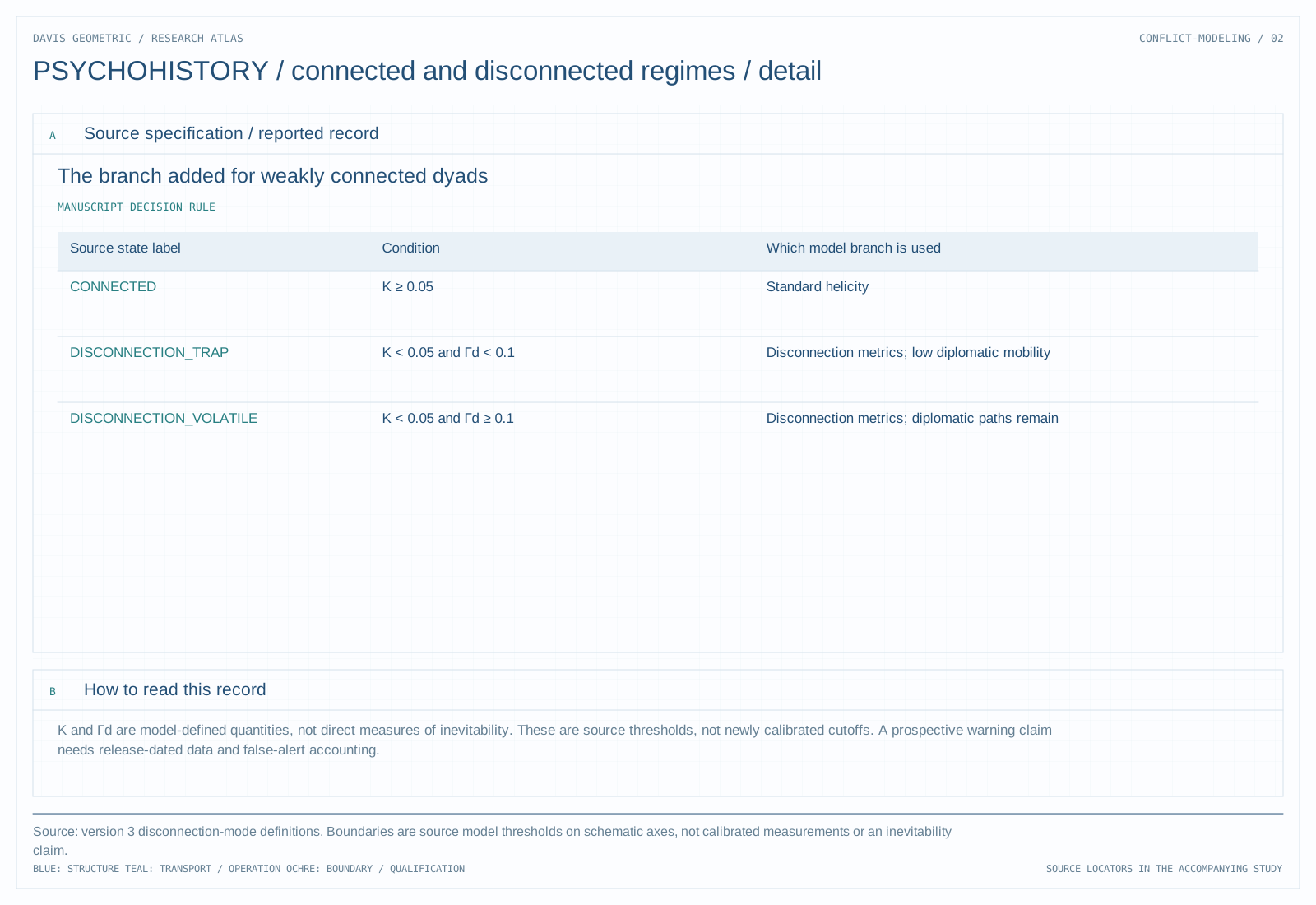
The branch added for weakly connected dyads
Scroll horizontally to inspect the full table →
| Source state label | Condition | Which model branch is used |
|---|---|---|
| CONNECTED | K ≥ 0.05 | Standard helicity |
| DISCONNECTION_TRAP | K < 0.05 and Γd < 0.1 | Disconnection metrics; low diplomatic mobility |
| DISCONNECTION_VOLATILE | K < 0.05 and Γd ≥ 0.1 | Disconnection metrics; diplomatic paths remain |
K and Γd are model-defined quantities, not direct measures of inevitability. These are source thresholds, not newly calibrated cutoffs. A prospective warning claim needs release-dated data and false-alert accounting.
psychohistory_paper_v3.tex · Version 3.0: K-floor gate and disconnection-mode classification table
Read the technical figure
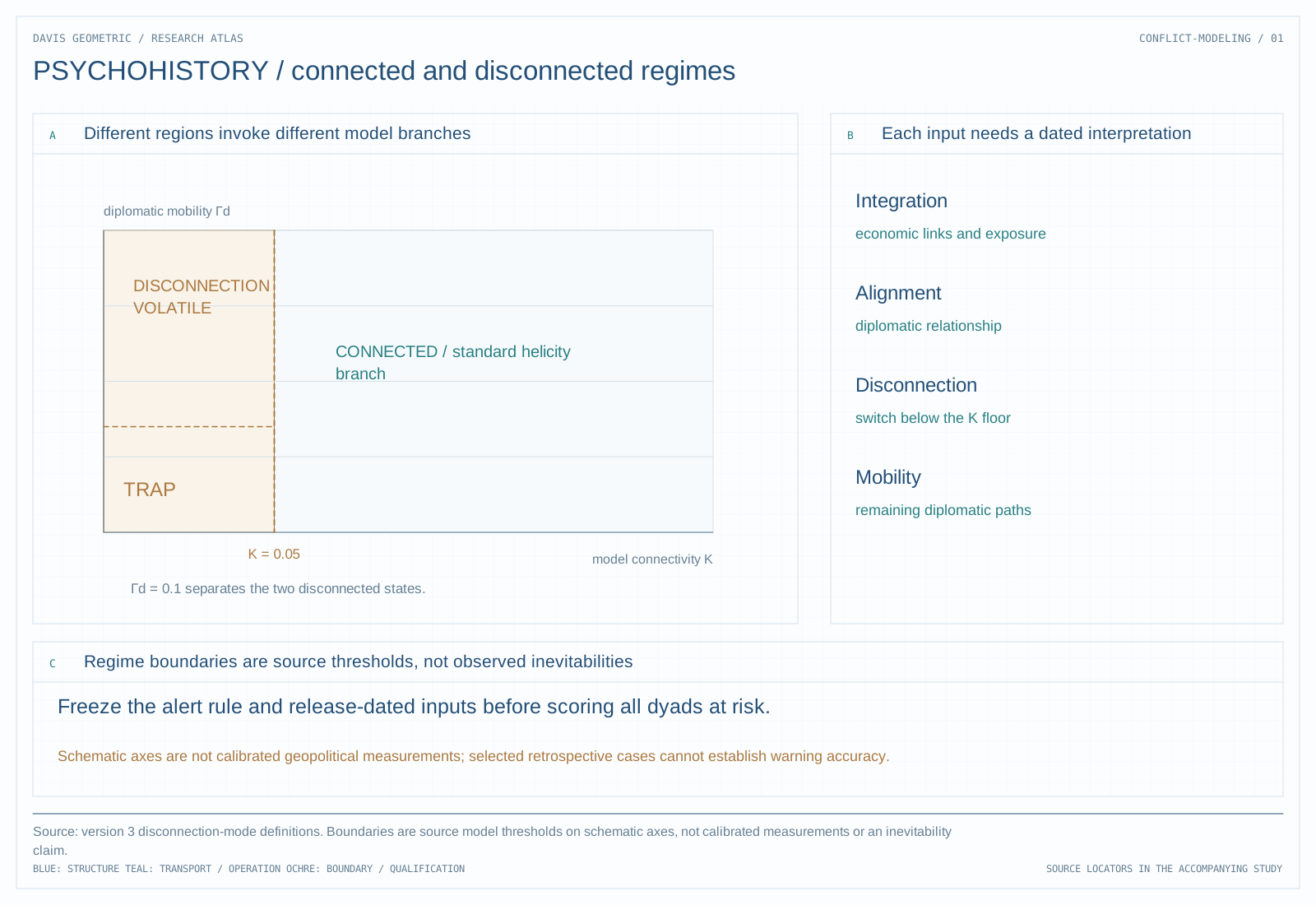
Source: version 3 disconnection-mode definitions. Boundaries are source model thresholds on schematic axes, not calibrated measurements or an inevitability claim.
Source: version 3 disconnection-mode definitions. Boundaries are source model thresholds on schematic axes, not calibrated measurements or an inevitability claim.
Supporting detail
The hypothesis behind the representation
The manuscript proposes that persistent economic links combined with deteriorating alignment can indicate structural stress. This translates “weaponized interdependence” into measurable features of a dyad rather than treating all international relationships as a single scalar similarity.
The strong historical wording that conflict becomes inevitable goes beyond this representation. Similar feature patterns can precede different political decisions; an observed association does not establish an unavoidable causal outcome.
Why version 3 adds a disconnection mode
The local version 3 manuscript recognizes that its standard helicity expression breaks down as the stated curvature quantity approaches zero. It introduces a floor and switches to security-posture, hostility, and a disconnection-mode spectral diagnostic.
That branch is part of the model specification and needs its own evaluation. It also shows why “one ratio across all dyads” would misrepresent the actual work. The manuscript’s historical lead times require release-dated inputs and frozen alert rules before they can be interpreted as available warning.
Sources, scope, and next question
Historical-modeling manuscript with reported retrospective evaluations; causal inevitability and prospective warning are not established.
A representative validation should reconstruct what was knowable at each date and score all dyads at risk, including non-events. Selected conflicts and retrospective case narratives cannot by themselves establish alert calibration.
- The Geometry of War: study & book.
- Psychohistory v3 paper.
- Predicting Interstate Conflict 72 Days in Advance: A Topological Approach to Weaponized Interdependence.
Additional source versions reviewed
-
helicity/theory/psychohistory_paper_v3.texLocal project manuscript or report · not republished here