KRAKEN / sensor geometry, disagreement, and provenance
Research settingIBM
KRAKEN explores a multi-modal maritime analysis workflow in which translated sensor information, uncertainty, and decision provenance remain inspectable. The repository presents a blind-test demonstrator rather than a field-validated detection system.
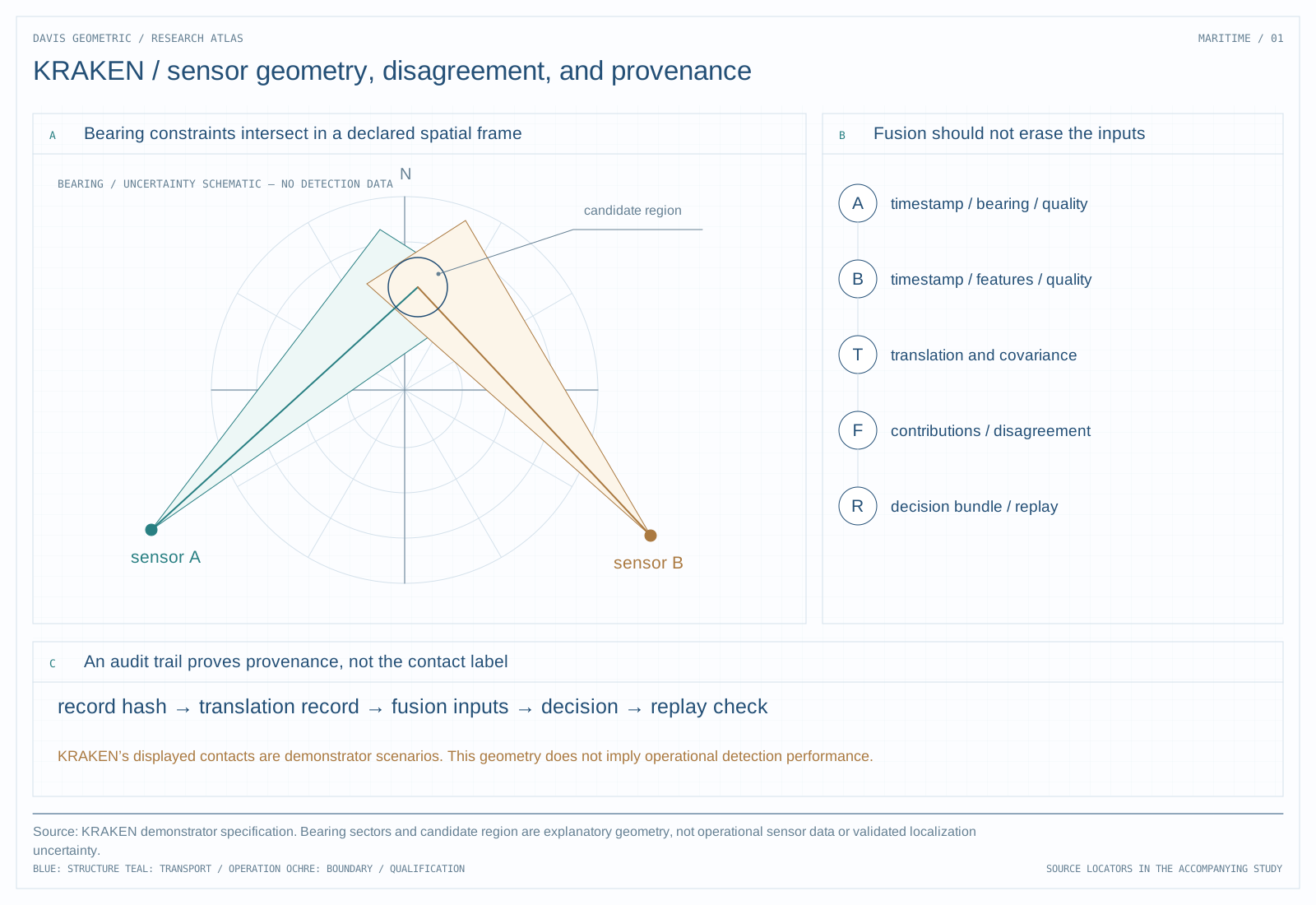
From the research record
Inspect the work
Original figures, recorded values, and explicit model details. Each exhibit identifies its source and what the comparison means.
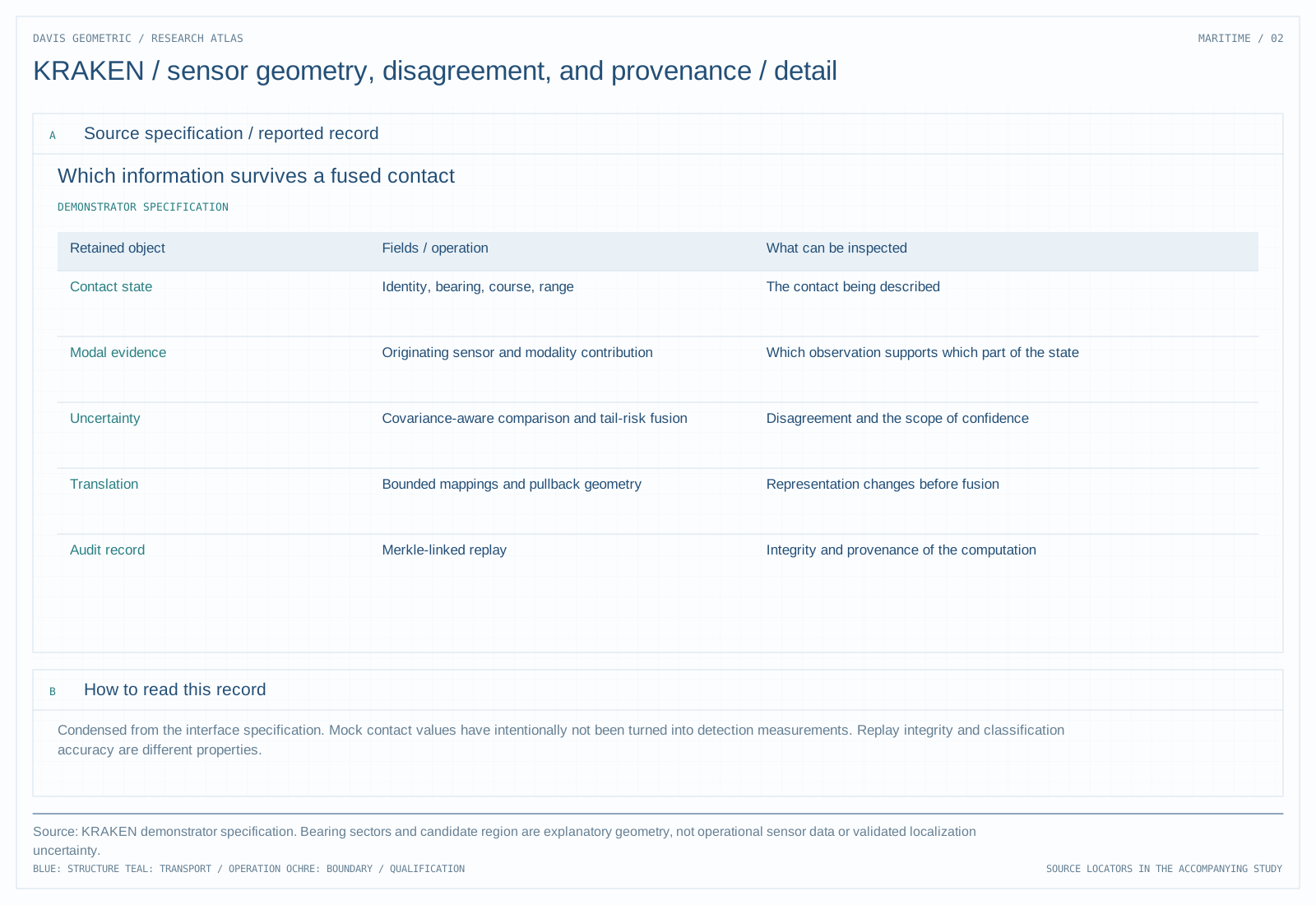
Which information survives a fused contact
Scroll horizontally to inspect the full table →
| Retained object | Fields / operation | What can be inspected |
|---|---|---|
| Contact state | Identity, bearing, course, range | The contact being described |
| Modal evidence | Originating sensor and modality contribution | Which observation supports which part of the state |
| Uncertainty | Covariance-aware comparison and tail-risk fusion | Disagreement and the scope of confidence |
| Translation | Bounded mappings and pullback geometry | Representation changes before fusion |
| Audit record | Merkle-linked replay | Integrity and provenance of the computation |
Condensed from the interface specification. Mock contact values have intentionally not been turned into detection measurements. Replay integrity and classification accuracy are different properties.
KRAKEN_DEMO_REDESIGN_SPEC.md · Multi-modal contact interface and audit/replay design
Read the technical figure
Source: KRAKEN demonstrator specification. Bearing sectors and candidate region are explanatory geometry, not operational sensor data or validated localization uncertainty.
Source: KRAKEN demonstrator specification. Bearing sectors and candidate region are explanatory geometry, not operational sensor data or validated localization uncertainty.
Supporting detail
A shared representation without erasing the sensor
The project record describes bounded translation, pullback geometry, covariance-aware signature comparison, and tail-risk fusion. These components address a specific difficulty: two sensors can support different aspects of the same contact, and their disagreements can matter as much as their agreement.
The proposed interface makes contact identity, bearing, course, range, modal contributions, and uncertainty visible together. Acoustic features and other observations should remain traceable to their originating modality rather than disappearing into one unexplained confidence percentage.
A replayable decision is a distinct achievement
The demonstrator includes Merkle-linked audit-replay concepts. These can help show which records and transformations produced a decision. Integrity of that record is separate from whether the contact was classified correctly.
Likewise, a blind test is informative only relative to how its scenarios were generated and concealed. Sealed labels on synthetic contacts do not establish performance against real sensor noise, propagation conditions, or an operationally representative mixture of contacts.
Sources, scope, and next question
Demonstrator and interface specifications; displayed scenario contacts are not operational detection evidence.
A representative evaluation should expose the scenario provenance and compare individual modalities with the fused result, retaining disagreement and abstention. Field-performance claims require a separate labeled observational record.
Additional source versions reviewed
-
kraken/KRAKEN_DEMO_REDESIGN_SPEC.mdLocal project manuscript or report · not republished here