LAMINAR / measured incidence beside surrogate controls
Research settingIndependent
HELICITY is the broader market-analysis project. Within it, LAMINAR measures an order-flow coherence label across twelve futures instruments: how often the label appears, how it responds to controlled perturbations, and whether it persists when the surrounding context changes.
From the research record
Inspect the work
Original figures, recorded values, and explicit model details. Each exhibit identifies its source and what the comparison means.
The classifier responds to surrogate inputs too
Scroll horizontally to inspect the full figure →
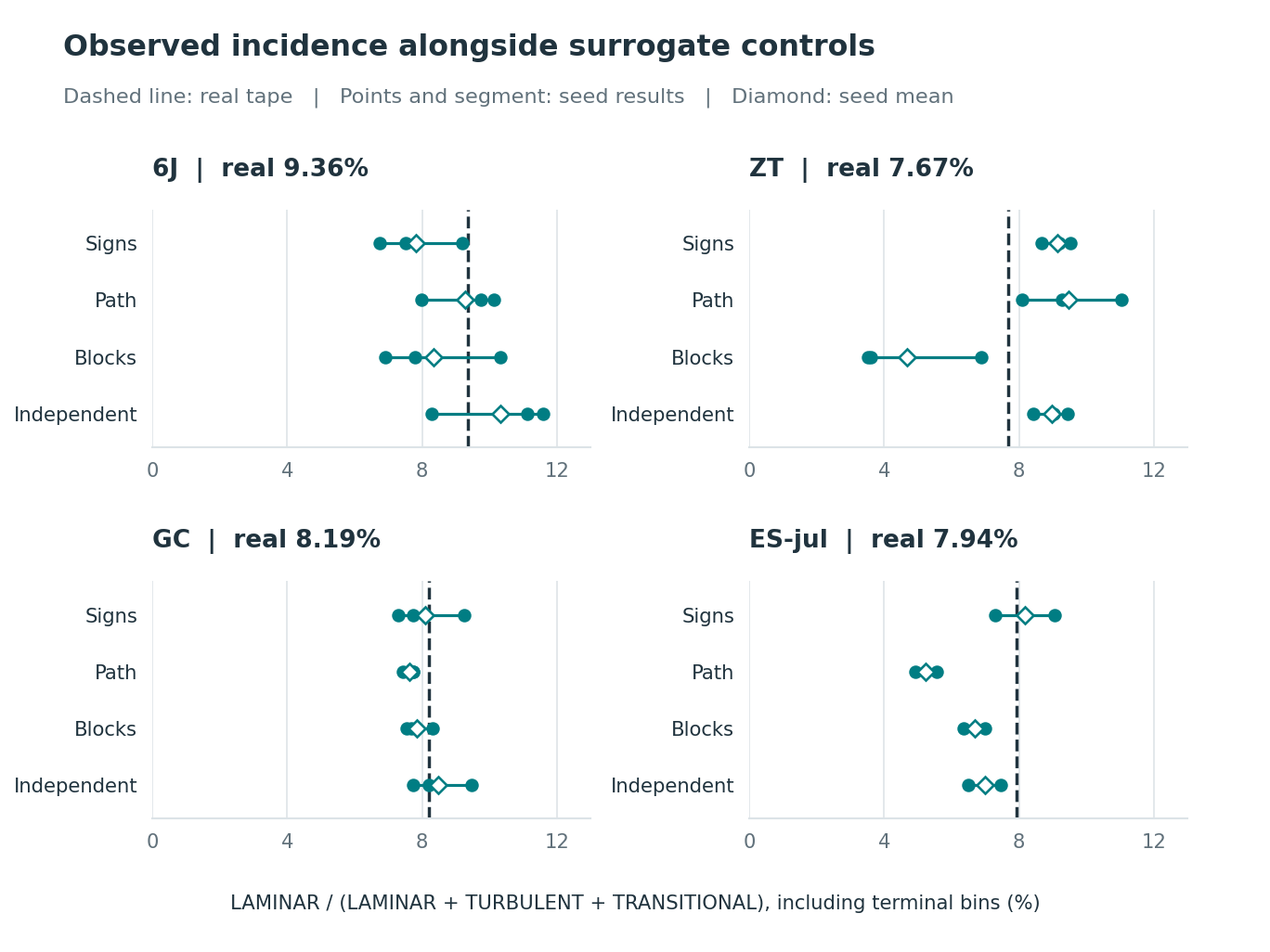
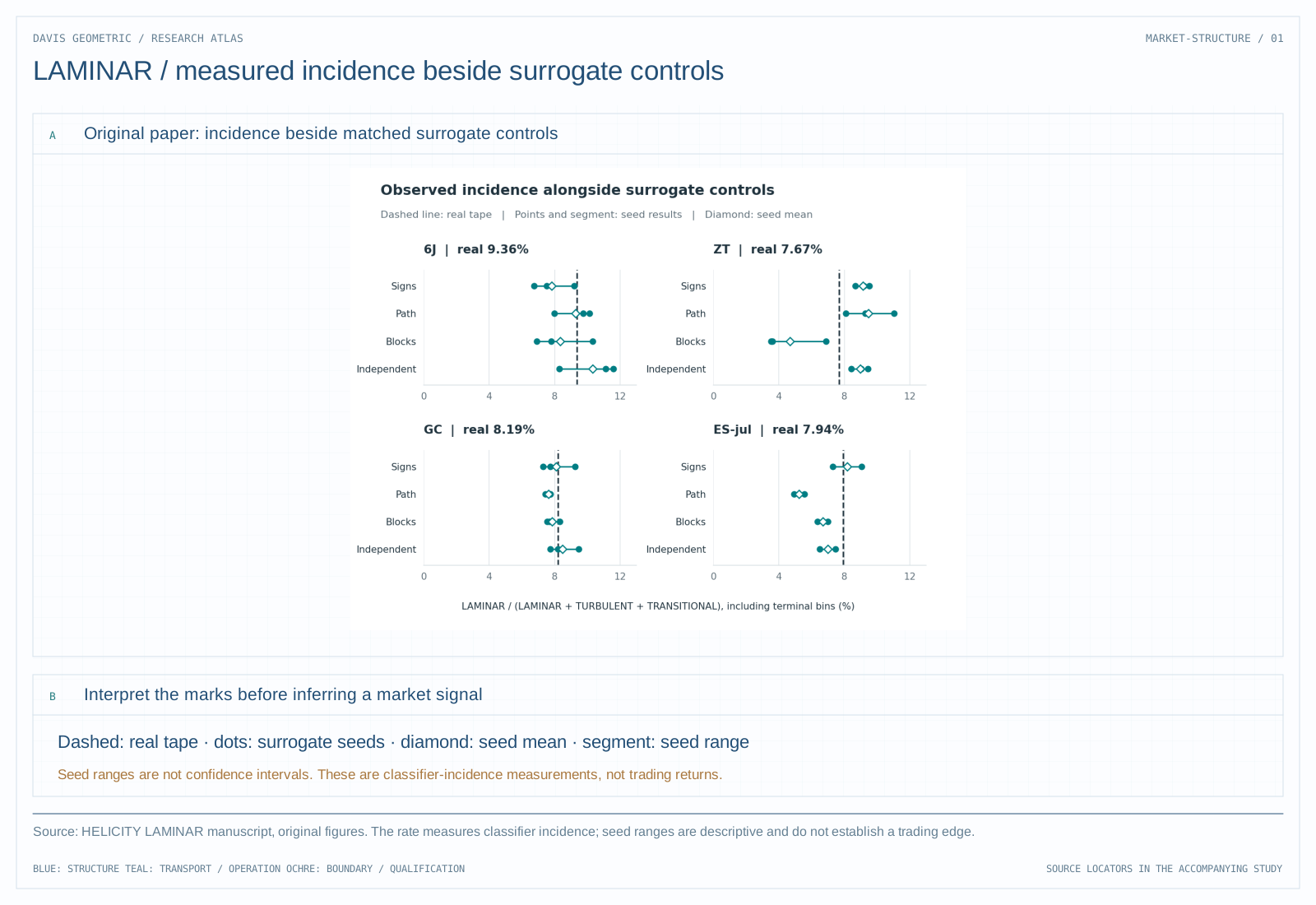
Original LAMINAR manuscript figure. Dashed lines give matched real-input incidence. Dots are seed results, diamonds their means, and segments their ranges—not confidence intervals. There are three surrogate seeds for 6J, ZT and GC, and two for ES. The denominator here includes terminal bins; the sample table below uses the manuscript’s different L + U + R denominator.
03_surrogates.png · Original paper figure; copied without alteration
Session variation and two denominators
Scroll horizontally to inspect the full figure →
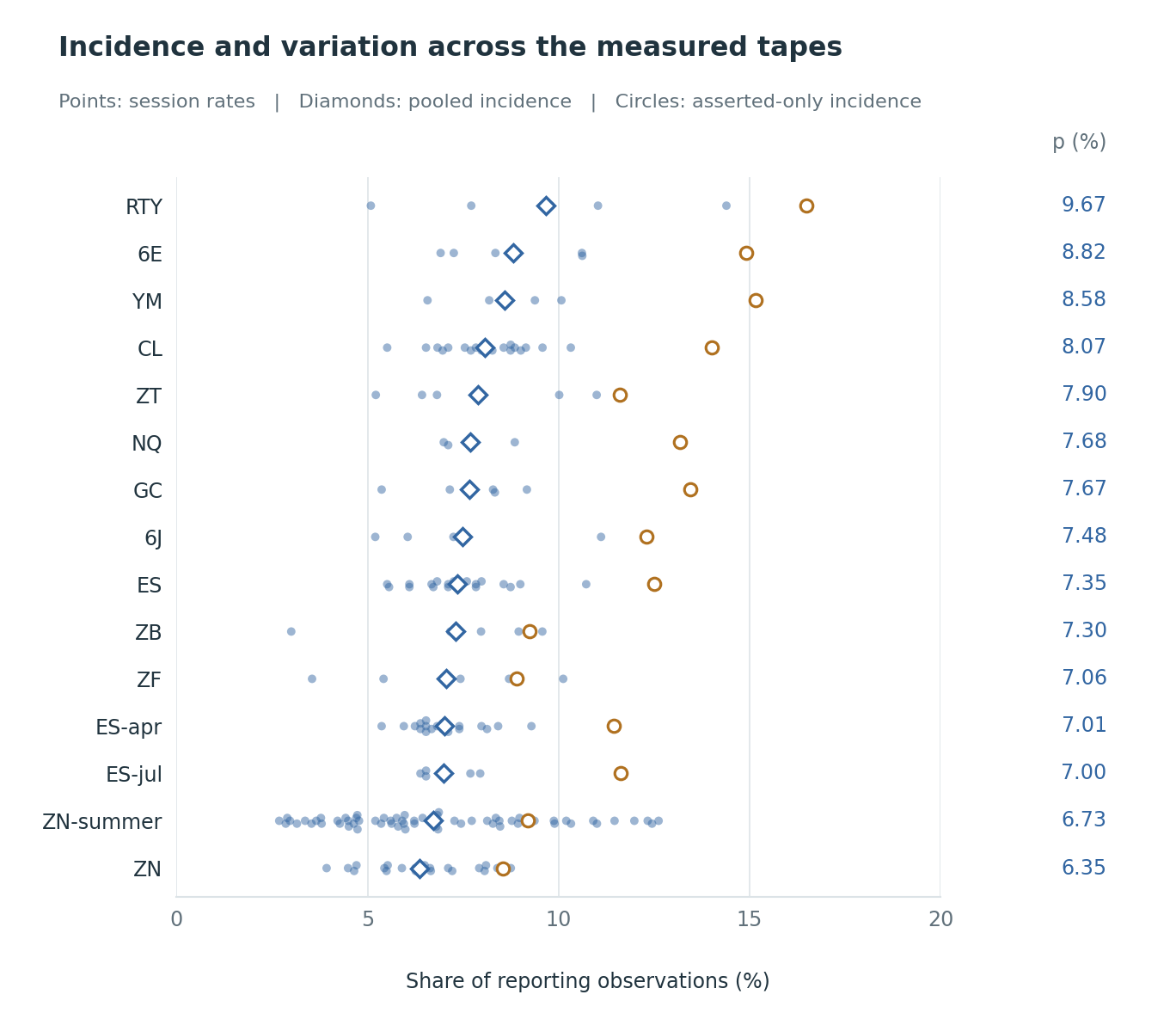
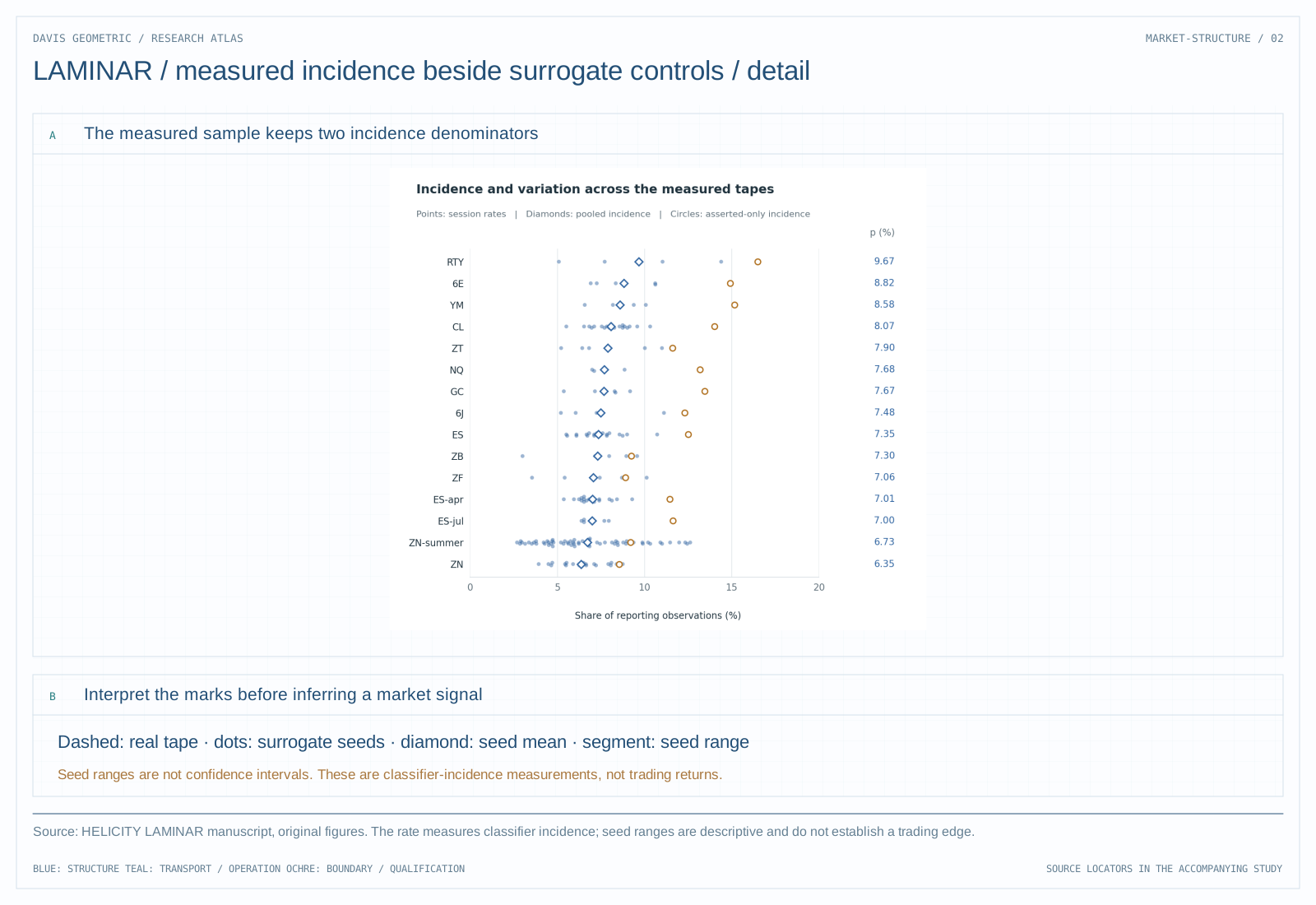
Original manuscript figure comparing session incidence with tape-level summaries. This companion view exposes variation across sessions and how conditioning on an asserted regime changes the denominator.
02_incidence.png · Original paper figure; copied without alteration
The measured sample, with both incidence denominators
Scroll horizontally to inspect the full table →
| Tape | Trades | N = L + U + R | L / N (%) | L / (L + U) (%) | Sessions with L / all | 2026 period |
|---|---|---|---|---|---|---|
| RTY | 421,982 | 3,370 | 9.67 | 16.47 | 5/5 | Jul |
| 6E | 133,221 | 3,231 | 8.82 | 14.91 | 5/5 | Jul |
| YM | 277,026 | 3,299 | 8.58 | 15.17 | 5/5 | Jul |
| CL | 3,392,888 | 12,964 | 8.07 | 14.00 | 19/19 | Mar–Apr |
| ZT | 128,267 | 2,976 | 7.90 | 11.60 | 5/5 | Jul |
| NQ | 1,795,518 | 3,385 | 7.68 | 13.18 | 5/5 | Jul |
| GC | 331,552 | 3,377 | 7.67 | 13.45 | 5/5 | Jul |
| 6J | 95,882 | 3,221 | 7.48 | 12.31 | 5/5 | Jul |
| ES | 10,298,409 | 13,303 | 7.35 | 12.50 | 20/20 | Mar–Apr |
| ZB | 144,380 | 2,904 | 7.30 | 9.23 | 5/5 | Jul |
| ZF | 263,750 | 3,060 | 7.06 | 8.90 | 5/5 | Jul |
| ES-apr | 8,887,782 | 13,720 | 7.01 | 11.46 | 20/20 | Apr–May |
| ES-jul | 2,088,165 | 3,385 | 7.00 | 11.62 | 5/5 | Jul |
| ZN-summer | 5,647,076 | 42,144 | 6.73 | 9.20 | 65/65 | Apr–Jul |
| ZN | 2,628,030 | 13,118 | 6.35 | 8.55 | 20/20 | Mar–Apr |
L = LAMINAR, U = TURBULENT, R = TRANSITIONAL. N excludes initializing and separately recorded terminal bins. Conditioning on an asserted regime drops R from the denominator. These are label-incidence measurements, not returns or trading performance.
sample_table.tex · Table tab:sample; all 15 rows
Read the technical figure
Source: HELICITY LAMINAR manuscript, original figures. The rate measures classifier incidence; seed ranges are descriptive and do not establish a trading edge.
Source: HELICITY LAMINAR manuscript, original figures. The rate measures classifier incidence; seed ranges are descriptive and do not establish a trading edge.
Supporting detail
Risk overlay and order-flow measurement are different tasks
The project README describes a risk overlay rather than a directional call. It acknowledges that its own backtests underperformed buy-and-hold on average and distinguishes defensive behavior in falling markets from general outperformance.
The order-flow work examines spectral and temporal structure of the book. Its synthetic blind trial plants a signal in generated sessions; passing that test shows that the implementation responds to the planted structure, not that the same signal produces an edge in real markets.
The later controls change the interpretation
The reviewed LAMINAR manuscript separates label incidence, perturbation sensitivity, and context dependence. In its control grid, independently resampled session marginals produce mean incidence at least as high as the real inputs in three tested instruments. A label appearing often is therefore insufficient evidence of market-specific organization.
The tested S&P session responds more strongly to price-path permutation. Grafted real segments have higher inside-than-outside incidence for some instruments and lower incidence for others. These mixed findings are substantive: the classifier responds to both selected structure and context, rather than identifying one universal flow state.
Sources, scope, and next question
LAMINAR working paper on SSRN; historical replays and controlled comparisons within HELICITY. The study concerns classifier measurement, not predictive returns or execution performance.
The measurement study should be the representative paper, with returns and execution performance treated as separate downstream questions. Price representation, initialization, withheld labels, and control construction must remain part of each reported incidence.
Additional source versions reviewed
-
helicity/README.mdLocal project manuscript or report · not republished here -
helicity/docs/paper/incidence_of_coherent_order_flow.texLocal project manuscript or report · not republished here